
Fourier Data Center Inc. used the 2026 Advanced Liquid Cooling Technologies Conference in Taipei to position itself at the center of a broader shift underway in AI infrastructure design. The conference, co-developed with Intel, focused heavily on how thermal engineering, compute density, and deployment models are converging into a single operational challenge for hyperscale and HPC environments.

Rather than highlighting isolated hardware upgrades, discussions across the event reflected a deeper industry transition toward system-level integration. Thermal interface materials and advanced cooling technologies continue to evolve at the silicon and packaging layer. However, infrastructure operators increasingly measure value by how efficiently vendors can integrate cooling, compute, and power into deployable environments at scale.
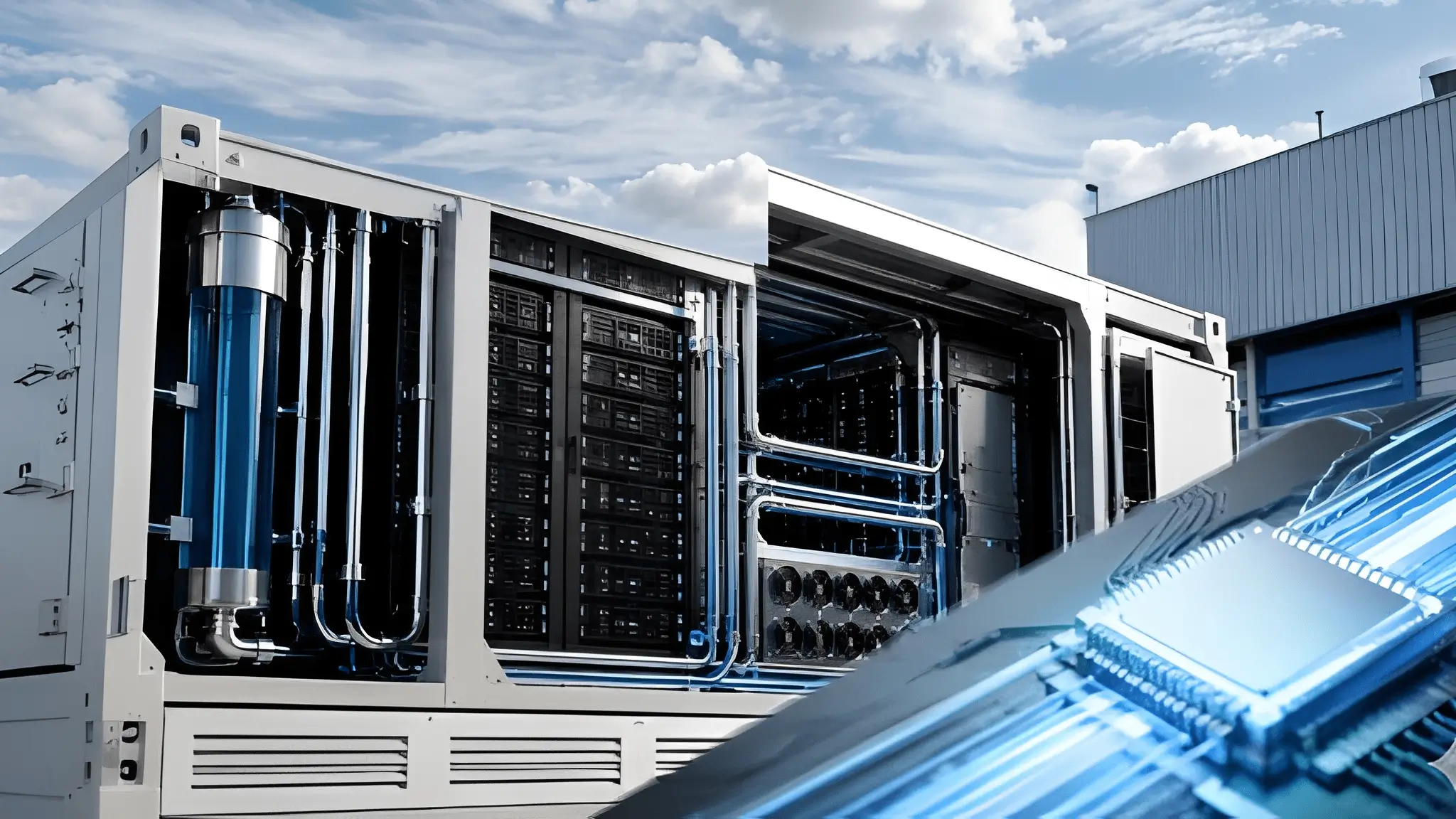
Fourier used the event to demonstrate how that philosophy translates into physical infrastructure. The company presented a 20-foot modular AI data center container designed around integrated system architecture. Visitors toured the container onsite, where the company showcased the internal coordination between liquid cooling systems, power delivery, and compute infrastructure within a prefabricated deployment model.
The demonstration underscored how modular AI deployments are becoming less about individual hardware specifications and more about operational synchronization. For infrastructure builders, the challenge now centers on orchestrating thermal management, energy distribution, and high-density compute as a unified architecture that can deploy rapidly across multiple environments.

Deployment Speed Is Becoming a Strategic Infrastructure Metric
As AI infrastructure demand accelerates globally, deployment timelines increasingly shape competitive positioning across the data center sector. Delays tied to system validation, interoperability testing, or onsite integration can directly affect revenue realization for operators scaling GPU capacity.
Conference discussions reflected growing alignment between platform providers, cooling vendors, and infrastructure integrators. This emerging ecosystem coordination aims to reduce integration friction by standardizing interfaces between cooling systems, power architectures, and compute environments. Consequently, operators can shorten deployment cycles while lowering operational uncertainty in high-density AI builds.
For Fourier, deployment speed now represents the output of an integrated engineering strategy rather than a standalone logistics metric. The company continues to emphasize prefabrication, factory-built integration, and modular standardization as mechanisms to accelerate infrastructure delivery. These approaches also help reduce variability during onsite deployment, particularly in liquid-cooled AI environments where infrastructure complexity continues to rise.
The broader implication extends beyond manufacturing efficiency. Modular deployment strategies increasingly allow operators to scale AI infrastructure with greater predictability while maintaining consistency across geographically distributed facilities. That operational consistency has become increasingly valuable as enterprises and cloud providers race to expand AI compute availability.
Fourier Sees Integration Defining AI Infrastructure Competitiveness
Fourier CRO Justin Cass framed the market transition as a structural evolution in how AI infrastructure vendors compete globally. Instead of incremental gains from standalone hardware improvements, infrastructure providers now face pressure to deliver complete, deployable systems optimized for density, thermal efficiency, and scalability.
“AI infrastructure is entering a phase where density is mandatory, liquid cooling is foundational, and integration defines competitiveness. The market no longer requires incremental component improvements, but deployable systems that unify compute, cooling, and power into a single architecture, delivered consistently across global environments.”
That positioning reflects a wider industry trend as AI clusters move toward increasingly power-intensive and thermally demanding configurations. Traditional deployment approaches struggle to keep pace with the rapid scaling requirements associated with modern GPU environments, particularly as liquid cooling becomes central to next-generation infrastructure design.
Fourier’s strategy aligns closely with this transition. By focusing on integrated modular systems, the company aims to compress deployment timelines while supporting the density requirements associated with advanced AI and HPC workloads. The emphasis also reflects rising demand for repeatable infrastructure architectures that can scale across regions without requiring extensive onsite customization.
Integrated Modular Systems May Shape Next-Generation Compute Expansion
The conference highlighted how AI infrastructure development increasingly depends on coordination across the entire deployment stack. Cooling technologies alone no longer define competitive advantage. Instead, value creation increasingly comes from translating engineering advances into deployable infrastructure capable of supporting accelerated compute expansion.
Fourier believes the market will continue moving toward integrated and prefabricated deployment models as AI infrastructure scales globally. The company plans to maintain its focus on system-level integration designed around high-density compute environments and rapid deployment requirements.
As AI adoption drives larger GPU clusters and more thermally intensive workloads, infrastructure providers face mounting pressure to deliver scalable systems with predictable deployment outcomes. In that environment, integrated modular architectures could become one of the defining operational frameworks shaping the next phase of AI infrastructure expansion.











