 Skip to content
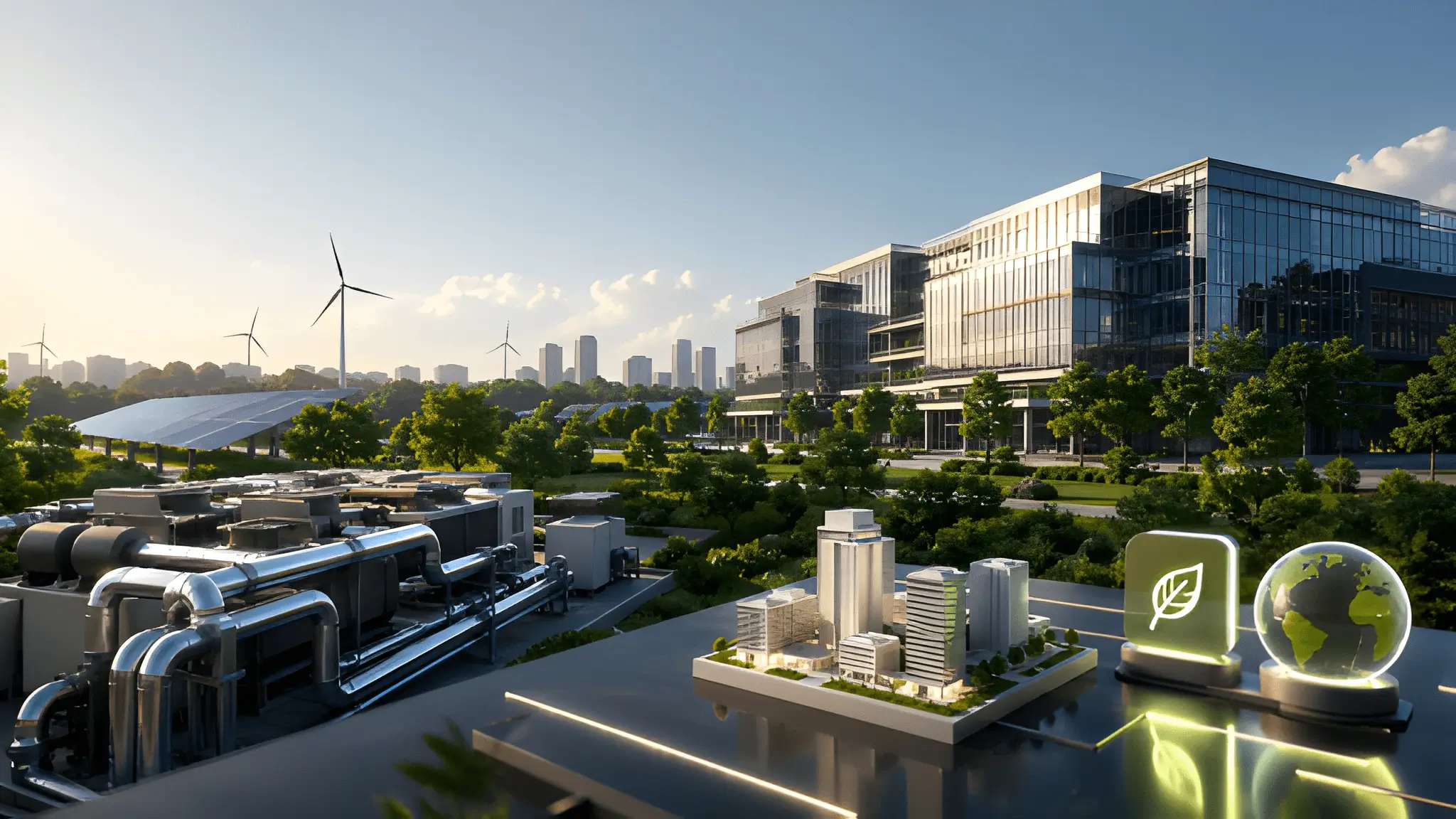
Tata Power, Keppel Limited, and Tata Realty and Infrastructure Limited have initiated a large-scale cooling-as-a-service rollout at Intellion Park in Chennai. The deployment places energy-efficient cooling at the center of India’s commercial infrastructure evolution.

The project spans over 25 acres in Taramani’s IT corridor and introduces a total installed capacity of 12,100 tonnes of refrigeration (TR). The partners expect the system to go live by October 2026 under a 15-year contract. The companies project more than 20% reduction in overall energy consumption, driven by high-efficiency cooling systems and lifecycle optimization.
Cooling demand continues to surge across India’s digital and commercial hubs. This deployment reflects a structural shift in how developers approach energy-intensive infrastructure, particularly as compute-heavy environments scale.
AI-Driven Operations Redefine Cooling Efficiency
At the core of the project sits an AI- and machine learning-enabled Operations Nerve Centre developed by Keppel. The platform enables real-time monitoring, predictive maintenance, and dynamic performance adjustments across the facility.

The system actively analyzes load patterns, environmental conditions, and system behavior to maintain optimal efficiency. This approach reduces operational inefficiencies and enhances system reliability without requiring manual intervention. The campus already integrates green power sourced from Tata Power, creating a hybrid energy ecosystem that combines renewable supply with intelligent demand-side optimization. As a result, the cooling layer evolves from a passive utility into an active energy management system.
The collaboration merges Tata Power’s expertise in energy systems, Keppel’s infrastructure capabilities, and Tata Realty’s asset management strategy. Together, they position cooling-as-a-service as a scalable model for commercial and industrial developments. This model removes the need for upfront capital investment in cooling infrastructure and shifts the focus toward performance-based service delivery. Developers and tenants gain predictable costs and optimized efficiency, while operators maintain control over system performance.
The partners indicated that the engagement could expand beyond cooling into broader HVAC systems over time, signaling a wider transformation in how building systems operate.
Leadership Signals Shift Toward Performance-Led Assets
Dr. Praveer Sinha, CEO and MD of Tata Power, said the initiative aligns with rising cooling demand in India’s commercial real estate sector and will help deliver “efficient, low-carbon cooling at scale” while supporting decarbonisation and long-term value creation.
Sanjay Dutt, MD and CEO of Tata Realty and Infrastructure Limited, said, “This agreement marks a fundamental shift in how we design, operate, and sustain modern commercial assets, from ownership-led infrastructure to a performance-driven, service-led model where outcomes define success.”
Cindy Lim, CEO of Keppel’s Infrastructure Division, said, “Cooling is no longer a standalone utility and is becoming core to how the built environment and commercial assets are designed, operated, and decarbonised. Our AI- and ML-enabled Operations Nerve Centre will continuously optimise energy performance in real time, enhancing efficiency, system resilience and cost outcomes.” She further noted that the partnership aims to establish a scalable model for deploying cooling-as-a-service across large developments.
India’s cooling demand trajectory continues to accelerate. According to the International Energy Agency, the country is expected to become the world’s largest consumer of space cooling by 2050. This surge places pressure on power grids, urban infrastructure, and sustainability targets. Cooling-as-a-service offers a pathway to decouple demand growth from energy consumption by embedding intelligence and efficiency into core systems.
Moreover, Tata Realty plans to expand its portfolio to around 30 million square feet over the next five years, targeting net-zero goals by 2045. The company is expected to leverage partnerships like this to integrate sustainability into large-scale developments.
Compute-Heavy Future Demands Smarter Energy Systems
The Chennai deployment highlights how cooling infrastructure is evolving alongside the rise of data-intensive environments. Commercial real estate, data centers, and mixed-use developments now require energy systems that can scale with compute demand.
However, traditional cooling models struggle to keep pace with this shift. Cooling-as-a-service introduces a flexible, performance-driven alternative that aligns operational efficiency with long-term sustainability.
The partnership also signals a growing pipeline of similar projects across India’s commercial and digital infrastructure landscape. As cooling demand rises, intelligent systems will define the next phase of energy infrastructure. In effect, Chennai becomes a testing ground for a model that could reshape how India powers its built environment.












