
Thermal Sustainability in Data Center Infrastructure Today
Heat has emerged as the defining sustainability constraint for modern digital infrastructure, surpassing power availability as the primary limiting factor.

Heat has emerged as the defining sustainability constraint for modern digital infrastructure, surpassing power availability as the primary limiting factor.

Accenture and Snowflake are making a calculated bet on where enterprise AI is headed. It has less to do with

Advances in physical AI, computer vision, edge computing, and electromechanical design are enabling machines to operate in open-ended, real-world environments

Yann LeCun, one of the most influential figures in artificial intelligence research, has launched a new startup that aims to

The expansion of always-on digital infrastructure has introduced a structural sustainability challenge that persists regardless of utilization levels. Across global

Hyperscale cloud architecture has been guided by a consistent set of assumptions. Massive resource pooling, statistical multiplexing, and deliberate overprovisioning

Across global data center markets, capacity expansion is often framed in terms of land availability, power access, cooling efficiency, and compute density. Yet behind these visible constraints, a quieter and increasingly consequential limitation is taking shape inside the white space itself. Interconnection density, the concentration of cabling, cross-connects, and internal network pathways is emerging as a structural bottleneck that directly influences scalability, reliability, and long-term operational flexibility.
As workloads grow more distributed and east-west traffic becomes dominant, internal connectivity has shifted from a secondary design consideration to a primary architectural determinant. Traditional assumptions that interconnection can scale linearly alongside racks and power are being challenged by physical limits, operational complexity, and signal integrity constraints. In many modern facilities, network density is no longer keeping pace with compute density, creating friction points that are difficult and expensive to resolve post-deployment.

The emergence of Neo Cloud represents a fundamental rethinking of how digital platforms are conceived, built, and operated. At the center of this shift is a departure from infrastructure-first thinking that has long defined traditional cloud models. Instead of beginning with standardized compute, storage, and networking abstractions, Neo Cloud design starts with workloads themselves. This workload-centric philosophy treats application behavior, performance sensitivity, scaling patterns, and operational dependencies as the primary design inputs, reshaping platform architecture from the inside out.
For a long span of time, cloud platforms evolved around generalized infrastructure pools. Virtual machines, shared storage tiers, and abstracted networks formed a universal substrate intended to support a wide range of applications. While this approach enabled rapid adoption and elastic scaling, it also introduced inefficiencies and mismatches between workload requirements and underlying platform behavior. Latency-sensitive applications, stateful services, burst-heavy workloads, and predictable steady-state systems were often forced into the same infrastructure molds, with optimization handled later through tuning, overprovisioning, or architectural compromises.

For decades, data center reliability has been framed through the language of redundancy. Power paths were duplicated, cooling systems mirrored,
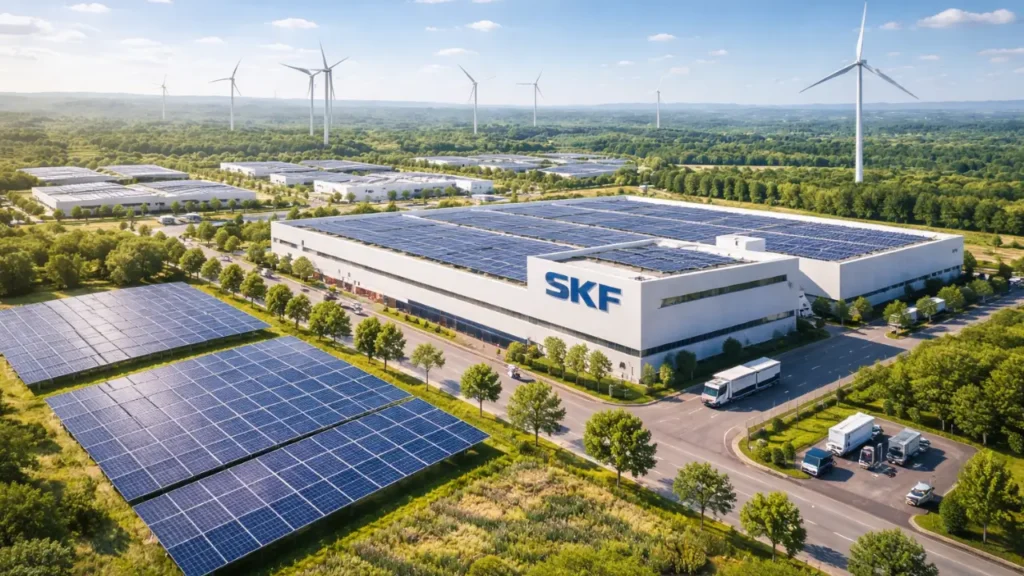
SKF has announced the addition of six newly decarbonized manufacturing facilities to its global operations, marking another measurable milestone in
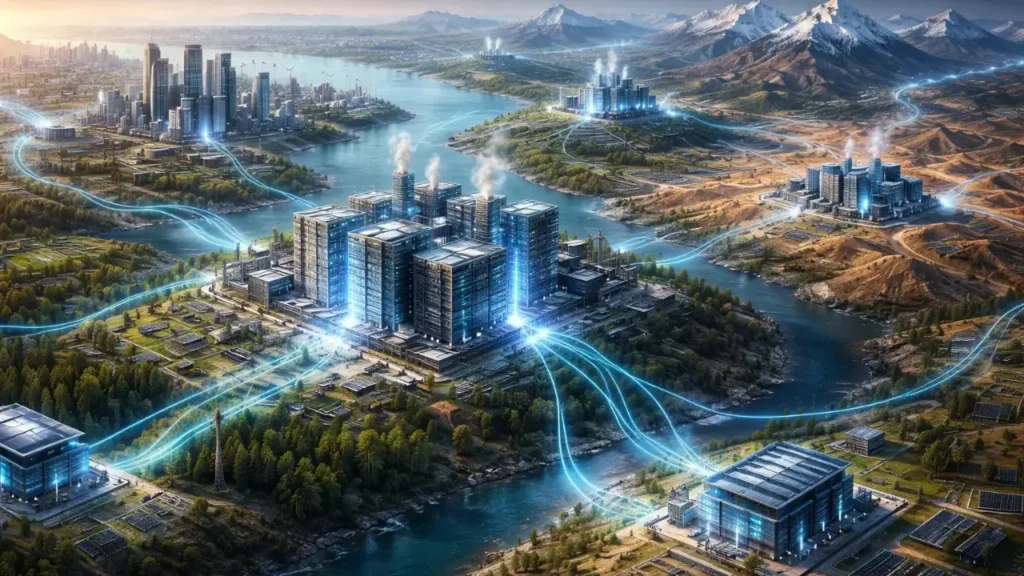
Setting the Context Across mature and emerging digital markets, physical constraints are becoming as influential as technical requirements in shaping

AI workloads are changing the thermal profile of data centres faster than air cooling can adapt. What worked for conventional

The Growing Case for AI Data Centers in Space We are observing AI data centers in space emerge as a

We are tracking developments suggesting that Nvidia GeForce GPU production cuts may influence global graphics card availability in early 2026.

Global Sustainability Standards Fragmentation Takes Shape
It is increasingly shaping how multinational organizations interpret, manage, and disclose sustainability performance. What was once a broadly aligned global reporting environment is now characterized by parallel frameworks, overlapping regulations, and region-specific interpretations. This fragmentation has emerged as a structural condition rather than a transitional phase, influencing how sustainability data is produced, assessed, and understood across markets.
The challenge is not the presence of sustainability standards themselves, but the growing lack of alignment between them. As jurisdictions introduce or refine frameworks to meet local priorities, organizations operating across borders must navigate multiple definitions of materiality, scope, and disclosure quality simultaneously.
How Global Sustainability Standards Began to Diverge
The “fragmentation of sustainability standards” did not occur overnight. Instead, it has been shaped by regional priorities, regulatory cultures, and economic structures that influence how sustainability is defined and measured.

The surge of excitement around artificial intelligence is now spilling into one of tech’s most ambitious frontiers: humanoid robotics. But behind the glossy demos and soaring valuations, investors are beginning to sound a note of caution. According to a recent report from CB Insights, many venture-backed humanoid robotics startups are running far ahead of what today’s technology, and economics can realistically support.
The concern isn’t about AI losing momentum. Quite the opposite. Data from KPMG and PitchBook shows that AI continues to dominate global venture capital flows, accounting for more than half of all investments this year. What’s changing is- “where” inside the AI ecosystem that capital is flowing and how speculative some of those bets may be becoming.
CB Insights data indicates that investor attention is rapidly pivoting toward industrial humanoid robotics. Last quarter alone, the sector recorded 17 deals, making it the most active investment category during that period.
If you peek inside today’s most advanced AI systems, you won’t find a single monolithic brain working overtime. Instead, you’ll

Defining the Landscape Across industries, sustainability has moved from ambition to obligation. Organizations now operate in environments shaped by regulatory
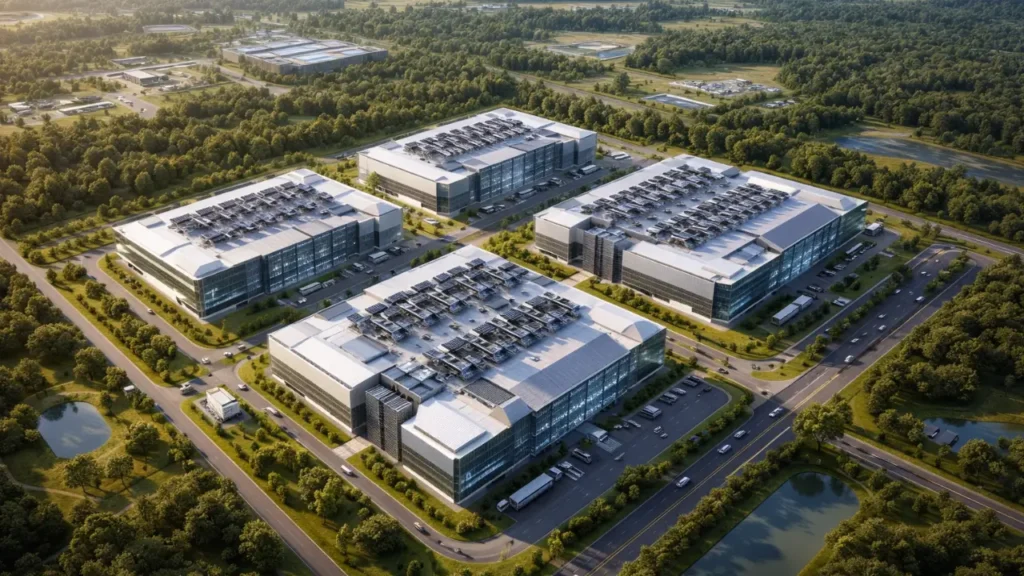
Defining the Environment As digital infrastructure expands globally, identifying viable locations for large-scale facilities has become increasingly complex. Data center
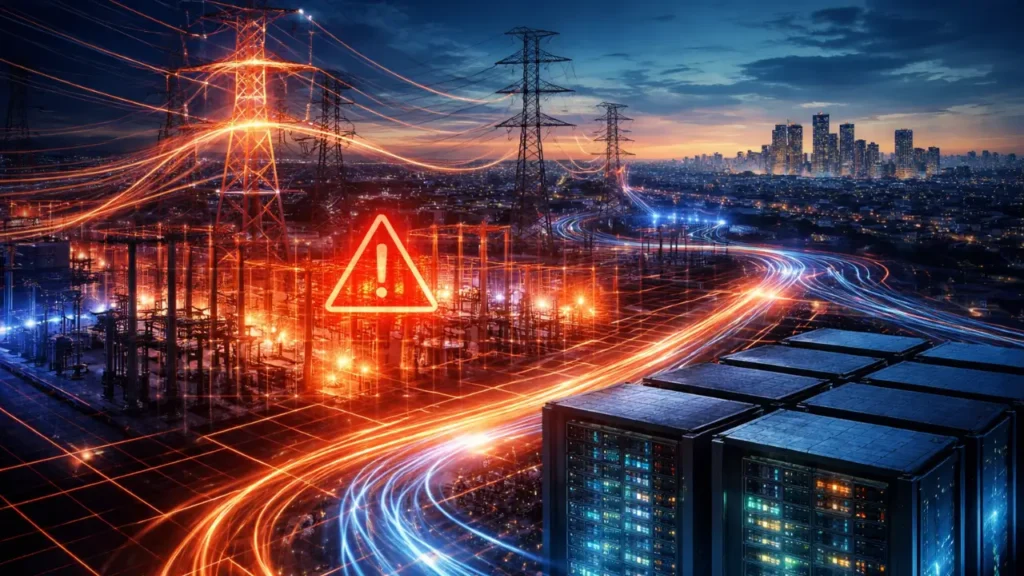
Why Grid Congestion Is Emerging as a Defining Pressure on Digital Infrastructure Grid congestion is now reshaping digital infrastructure planning

Opening Context Data center standardization breakdown has emerged as a defining structural shift in global digital infrastructure development. For years,

The Rise of Micro Data Centers
The rise of micro data centers marks a shift in how digital infrastructure is deployed, managed, and scaled. Organizations are seeing a transition away from fully centralized compute footprints toward smaller, modular, and highly localized environments. These compact facilities support the growing demand for rapid data processing across distributed ecosystems. They enable enterprises to position compute power closer to users, applications, and devices. As a result, they shape new architectural patterns and operational models across industries.
Why Micro Data Centers Are Reshaping Deployment Models
The expansion of connected systems, remote work, and real-time applications has influenced how organizations design infrastructure strategies. Micro data centers offer a controlled and self-contained environment capable of supporting essential workloads.

A New Chapter for Billion-Parameter Edge Models Billion-Parameter Edge Models are becoming central to discussions about on-device intelligence as organizations

We are closely tracking the rapid evolution of generative AI capabilities, and the introduction of the GPT-5.2 model marks a

Space Data Centers Gain New Momentum as SpaceX Signals Public Offering We are observing a pivotal shift in global digital

Understanding Heat Reuse 2.0 in AI Infrastructure Heat Reuse 2.0 describes an approach where data center operators convert AI cluster

Introduction: Understanding the Green Neo Cloud Challenge
The discussion around whether a green neo cloud is achievable has intensified as organizations deploy increasingly dense compute architectures to support artificial intelligence, high-performance workloads, and latency-sensitive applications. The question reflects a core tension: next-generation cloud environments depend on concentrated GPU clusters and high-throughput fabrics, yet these same systems elevate energy consumption and thermal output.
This article examines the operational realities surrounding the sustainability profile of neo cloud environments and explores whether the model can align with long-term environmental objectives.
Defining the Neo Cloud Model and Its Sustainability Context
What Makes Neo Cloud Architectures Distinct?
Neo cloud architectures emphasize proximity, density, and accelerated compute. Unlike traditional hyperscale models that distribute workloads across wide geographic regions, a neo cloud setup aims to bring GPU clusters closer to enterprise, telecom, and AI deployment zones. This approach supports lower latency, higher availability, and more efficient data movement for AI models and inference operations.

Cooling, power delivery, and deployment speed are now defining how quickly AI capacity can realistically come online. Against that backdrop,

The rapid expansion of high-densityGPU clusters is reshaping how operators plan, manage, and control energy across facilities. As workloads scale, the AI data center energy strategy becomes central to infrastructure design, operational reliability, and sustainability metrics. This shift is driven by the unique characteristics of AI training and inference workloads, which differ significantly from conventional compute patterns.
This article examines how GPU intensive operations are influencing power demands, why the energy paradigm is changing, and what frameworks operators are adopting to align workloads with available power capacity.
Why GPUs Are Reshaping the AI Data Center Energy Strategy
Rising GPU Power Density and Compute Demand

As governments and regulated enterprises push to expand their use of artificial intelligence, they are confronting a reality: operating AI at scale requires infrastructure most organizations cannot build fast enough on their own. Advanced chips, high-speed networking, extensive data storage, specialized software platforms, and strict security controls form the backbone of modern AI environments. Developing all of this internally demands heavy upfront investment and prolonged procurement and licensing processes that often stretch timelines into years and add layers of complexity beyond most organizations’ tolerance.
To remove that friction, AWS has introduced “AWS AI Factories,” a new approach that delivers dedicated, high-performance AWS AI infrastructure directly into customers’ own data centers. Rather than running AI workloads exclusively in shared hyperscale cloud locations, enterprises and governments can now operate what functions like a private AWS Region on-premises, fully managed by AWS but physically located within their facilities to support sovereignty, compliance, and security requirements.

Global Sustainability Standards Fragmentation Takes Shape
It is increasingly shaping how multinational organizations interpret, manage, and disclose sustainability performance. What was once a broadly aligned global reporting environment is now characterized by parallel frameworks, overlapping regulations, and region-specific interpretations. This fragmentation has emerged as a structural condition rather than a transitional phase, influencing how sustainability data is produced, assessed, and understood across markets.
The challenge is not the presence of sustainability standards themselves, but the growing lack of alignment between them. As jurisdictions introduce or refine frameworks to meet local priorities, organizations operating across borders must navigate multiple definitions of materiality, scope, and disclosure quality simultaneously.
How Global Sustainability Standards Began to Diverge
The “fragmentation of sustainability standards” did not occur overnight. Instead, it has been shaped by regional priorities, regulatory cultures, and economic structures that influence how sustainability is defined and measured.
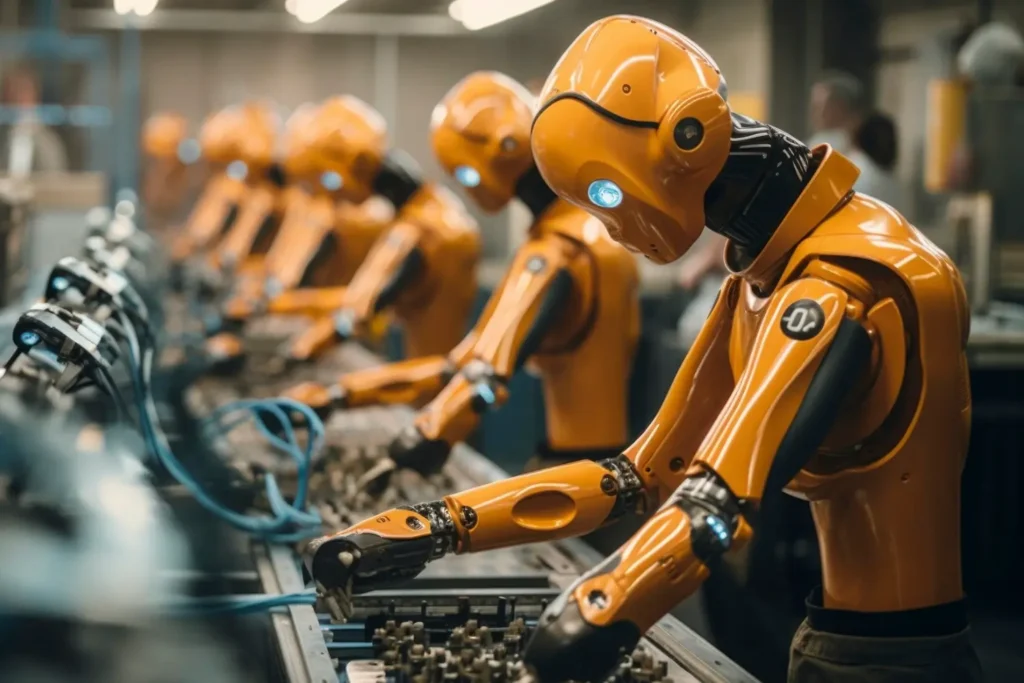
Why is the automotive industry suddenly poised for a massive financial commitment to robotics, despite their decades-long presence? Roshan Batheri

Designed by Freepik Nvidia is framing the current evolution of artificial intelligence as more than an incremental upgrade. CEO Jensen

As AI grows more powerful, its environmental cost grows alongside it. The computing required to train and run modern models is immense, and much of it remains concentrated in energy-hungry data centres. Against this backdrop, a shift is underway: intelligence is moving away from those distant hubs and closer to the places where data is created.
This transition, known as Green AI Edge Computing, reimagines how AI can expand without deepening its carbon footprint.
Centralised infrastructure consumes significant power for both computation and cooling, yet many real-world applications, such as autonomous vehicles and patient monitoring, need immediate, reliable responses that long-distance data transfers struggle to deliver. Edge computing tackles both the performance and sustainability pressures by processing information directly on local devices and sensors. This reduces the energy spent on data transmission, cuts latency, and enables the real-time decision-making modern systems demand. In a world where speed and environmental responsibility increasingly align, this marks a practical evolution in how AI operates.

For decades, AI has been a disembodied mind: powerful, fast, and utterly confined. But intelligence without a body is a limited thing.
Today, that limitation is dissolving. Machines are gaining the ability to see, touch, move, and respond. This is Physical AI, and it may redefine what intelligence means.
The transformation is subtle at first- robot dogs inspecting power plants, autonomous forklifts navigating warehouses, drones monitoring crops, exoskeletons assisting workers, surgical robots collaborating with doctors. But if we look beyond, the boundary between digital intelligence and physical capability is narrowing.
AWS calls this the beginning of “intelligence embodied” and the implications stretch far beyond robotics.

Mumbai, India, 24 October 2025 DigitalInfraNetwork incorporated into Compute Forecast — Illuminating the Future of AI, Compute, and the AI
Upgrade to the Elite plan at ($35.99/month) to unlock premium Compute Forecast content and continue reading.
View Elite plan
Upgrade to the Executive plan at ($65.99/month) for access to enterprise-level content, premium podcast, and executive insights.
View Executive plan