
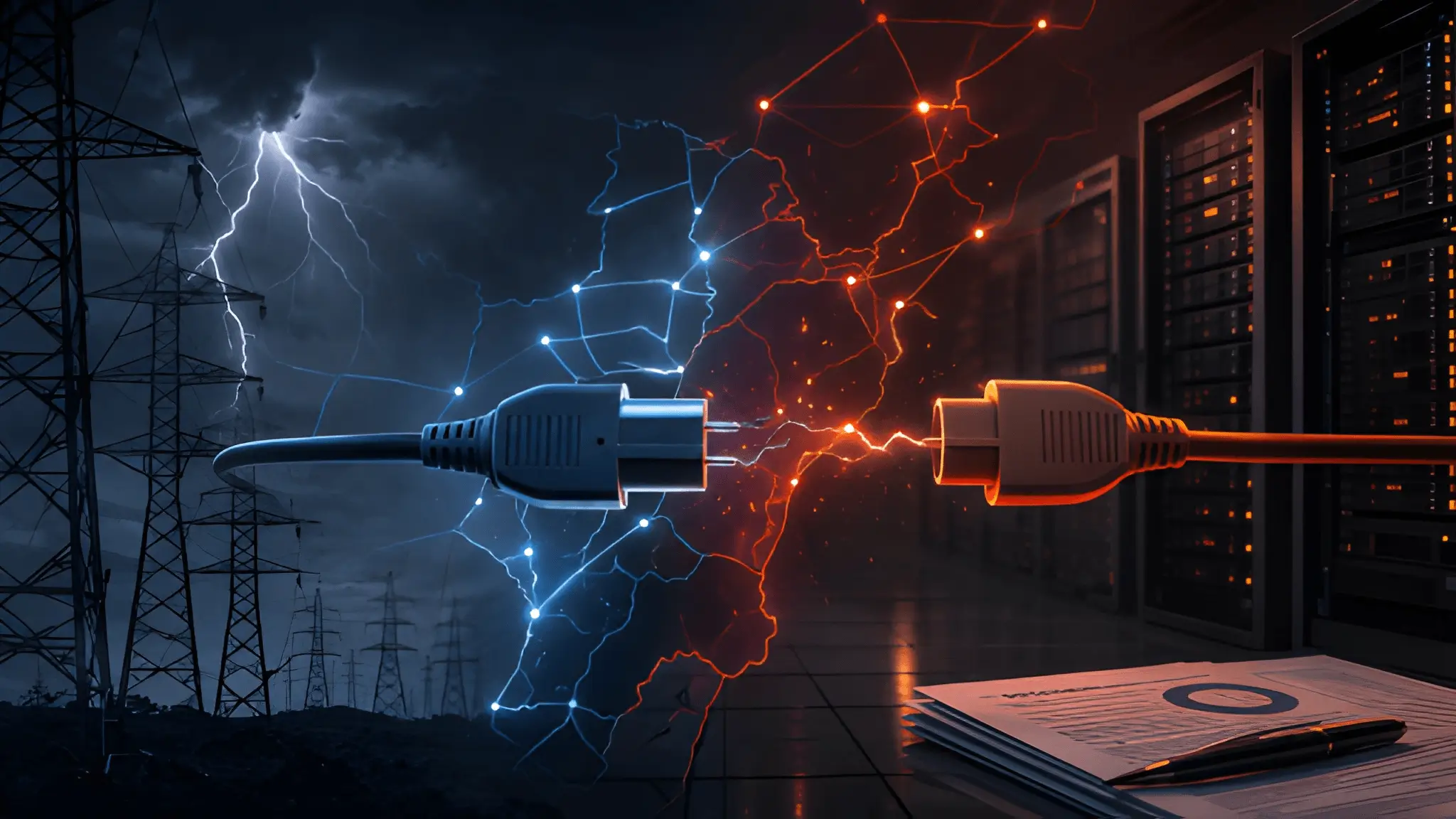
Procurement teams often celebrate renewable electricity agreements as evidence that AI infrastructure has aligned commercial growth with environmental commitments. Those contracts certainly influence carbon accounting, yet they do not change how electricity physically reaches an inference cluster when regional transmission constraints tighten without warning. Executive teams commonly report sustainability performance separately from operational availability because these metrics originate from different governance and reporting processes. Financial reporting follows contractual ownership of clean electricity attributes, while operational resilience depends on substations, transmission corridors, balancing reserves, and real-time dispatch decisions. That distinction becomes important because service availability directly depends on continuous electrical supply, while environmental reporting evaluates emissions associated with electricity consumption under established accounting methodologies. Understanding where environmental accounting ends and physical grid reliability begins helps infrastructure leaders build governance frameworks that reflect engineering realities rather than procurement optics.

Time-Shifted Megawatts: Why Annualized REC Math Breaks in a 5-Minute Inference World
Renewable Energy Certificates represent verified environmental attributes associated with electricity generation, but they generally do not prove that renewable electrons powered a facility during a specific operational interval. Annual accounting frameworks permit organizations to balance electricity consumption across long reporting periods because their primary objective focuses on emissions disclosure instead of operational continuity. AI inference environments frequently experience changing utilization patterns as user demand varies throughout the day, requiring infrastructure to respond to dynamic compute requirements. A workload that requires immediate processing cannot wait until renewable production increases later in the afternoon or another season entirely because customer requests arrive continuously. Grid operators therefore balance supply and demand using dispatchable generation, transmission availability, frequency control, and reserve margins rather than environmental certificates held by individual organizations. That difference illustrates that annual emissions accounting and real-time grid operations evaluate electricity through different frameworks designed for separate objectives.
Reliable inference services depend on continuous electrical supply because uninterrupted power supports consistent compute availability during production workloads. Grid congestion, unexpected generation outages, and transmission equipment failures can emerge within minutes regardless of how renewable procurement appears inside corporate reporting documents. However, certificate ownership cannot reserve transmission capacity or secure dispatch priority during periods when balancing authorities reduce available supply to maintain system stability. Infrastructure planning commonly considers regional congestion, reserve adequacy, transmission capability, and historical reliability alongside sustainability objectives when assessing long-term deployment locations. Those operational indicators describe physical grid performance, whereas annual procurement reports primarily document environmental attribute ownership and emissions accounting. Boards that understand this difference gain a more realistic view of inference resilience and avoid assuming that carbon accounting automatically represents electrical reliability.
The Board Packet Paradox: Green KPIs Go Up as Inference Uptime Goes Down
Sustainability reporting and infrastructure operations often follow separate governance processes because they serve different organizational reporting objectives. Environmental reporting emphasizes renewable procurement percentages, emissions inventories, and compliance with recognized disclosure frameworks because investors increasingly examine climate-related information during capital allocation decisions. Infrastructure organizations instead monitor availability, latency, power redundancy, maintenance windows, incident response, and contractual service commitments because those indicators directly influence customer experience. When organizations review these reporting streams independently, executives may receive limited visibility into how regional electrical infrastructure can influence operational resilience. Procurement achievements often appear within executive sustainability reporting, while localized transmission risks are typically assessed through engineering and operational planning processes, making integrated governance reviews increasingly valuable.. That structural separation can unintentionally delay conversations about infrastructure exposure until a regional power event affects production workloads.

Corporate governance frameworks increasingly encourage organizations to evaluate sustainability objectives together with operational risk when making long-term infrastructure investment decisions. Consequently, finance leaders should examine whether renewable procurement assumptions align with regional grid characteristics, historical curtailment events, transmission development schedules, and reserve adequacy forecasts before approving long-term AI capacity investments. Engineering organizations can strengthen those reviews by presenting probability-based reliability indicators rather than relying exclusively on traditional uptime percentages that may overlook regional infrastructure constraints. Risk committees also gain better visibility when sustainability metrics include contextual information describing where electricity physically enters the network supporting critical workloads. That integrated perspective enables executives to distinguish between environmental progress and infrastructure resilience without diminishing the importance of either objective. Strong governance ultimately depends on connecting accounting outcomes with engineering evidence so investment decisions reflect measurable operational conditions instead of isolated performance indicators.
When ‘Location-Based’ Emissions Reporting Becomes a Career Risk for Infra Leads
Corporate sustainability strategies increasingly rely on market-based accounting because organizations can demonstrate renewable procurement through recognized contractual instruments that satisfy established reporting frameworks. Those disclosures remain valuable for emissions transparency, yet they often communicate a different operational story than engineers observe inside regional electrical networks supporting production infrastructure. Infrastructure leaders generally inherit facilities, utility relationships, and deployment locations after procurement decisions already define the commercial structure of energy sourcing agreements. Operational accountability nevertheless remains firmly attached to platform reliability, customer experience, and service continuity whenever regional power disruptions affect AI workloads. Meanwhile, regulatory attention continues shifting toward more granular climate disclosures that encourage organizations to explain both procurement decisions and the physical characteristics of electricity systems supporting their operations. That evolution places infrastructure teams closer to governance discussions where engineering evidence increasingly influences enterprise risk assessments.
Location-based reporting introduces an additional operational perspective because it reflects the emissions intensity of the electricity grid serving a facility rather than contractual renewable purchases completed elsewhere. That distinction encourages executives to examine whether computing capacity resides within regions that consistently provide both dependable electrical service and credible decarbonization pathways over long investment cycles. Infrastructure managers may therefore face difficult conversations when availability challenges emerge despite sustainability reports showing strong renewable procurement achievements across the broader enterprise portfolio. Technical teams should document regional transmission constraints, historical curtailment frequency, reserve margin trends, and interconnection dependencies alongside environmental reporting to ensure executive discussions remain grounded in physical operating conditions. Those engineering records help distinguish procurement strategy from operational execution when post-incident reviews evaluate why customer-facing services experienced disruption despite positive environmental disclosures.
The Myth of ‘Virtual Power’ in a Physical World: Why Balancing Authorities Ignore Your PPA
Power purchase agreements establish commercial relationships between electricity buyers and renewable generators, but balancing authorities operate under an entirely different set of responsibilities focused on maintaining continuous grid stability. Control rooms dispatch available generation according to system frequency, transmission capability, operating reserves, equipment limitations, and real-time demand rather than the contractual ownership of renewable attributes held by individual organizations. Electricity therefore follows interconnected network physics instead of commercial documentation because electrons cannot distinguish between competing financial agreements once they enter the transmission system. A renewable facility located hundreds of kilometers away may successfully fulfill contractual obligations while contributing little to the immediate reliability of another region experiencing congestion or transmission outages. Instead, balancing authorities prioritize actions that preserve voltage stability, frequency control, and public reliability across the interconnected system because those responsibilities underpin secure grid operations.
Regional transmission capacity determines whether electricity can physically support a facility during periods of elevated demand regardless of the environmental attributes associated with contracted generation resources. Congestion, planned maintenance, severe weather, equipment failures, or unexpected generation losses can reduce deliverable capacity even when renewable projects continue producing electricity elsewhere on the interconnected network. Long-term infrastructure planning therefore benefits from evaluating substation resilience, transmission expansion schedules, interconnection queues, and reserve adequacy alongside renewable procurement strategies before selecting deployment regions for AI clusters. Those engineering considerations often influence operational resilience more directly than contractual energy matching because they determine how electricity actually reaches computing infrastructure during stressed system conditions. Executive investment decisions become more durable when commercial procurement complements rather than substitutes rigorous assessment of regional electrical infrastructure supporting mission-critical workloads.
From Carbon Theater to Capacity Truth — Rewriting AI Infra KPIs for Electrons, Not Offsets
Organizations investing heavily in AI infrastructure now operate in an environment where electricity availability has become a strategic planning variable rather than a background utility service. Renewable procurement remains an important component of long-term decarbonization strategies, yet executive governance should distinguish environmental performance from the engineering realities that determine whether inference platforms remain available during regional grid disturbances. CFOs and infrastructure leaders can strengthen investment decisions by incorporating measurable indicators such as firm power delivery, regional reserve margins, historical curtailment frequency, transmission congestion exposure, and balancing authority performance into deployment evaluations. Those operational metrics complement sustainability reporting because they quantify the physical conditions supporting digital infrastructure instead of relying exclusively on contractual environmental instruments. Procurement teams, engineering organizations, finance executives, and sustainability leaders all contribute different expertise, making integrated governance more valuable than isolated reporting structures built around independent objectives.
Future AI infrastructure strategies will likely require governance models that evaluate carbon performance and electrical resilience with equal analytical rigor because both directly influence enterprise value through different mechanisms. Executive dashboards should therefore include firm capacity availability, expected interruption probability, regional transmission constraints, reserve adequacy, and infrastructure dependency mapping alongside established sustainability indicators to provide a more complete investment picture. Carbon accounting continues to serve an essential role in climate disclosure, but operational resilience ultimately depends on the characteristics of the electrical network supplying each deployment region throughout every hour of operation. Boards that review these dimensions together gain a clearer understanding of infrastructure risk while avoiding assumptions that environmental procurement alone guarantees uninterrupted compute availability. Engineering evidence, regional grid intelligence, and transparent operational metrics create stronger governance than offset-focused reporting because they align strategic planning with the physical behavior of interconnected electricity systems.











