 Skip to content
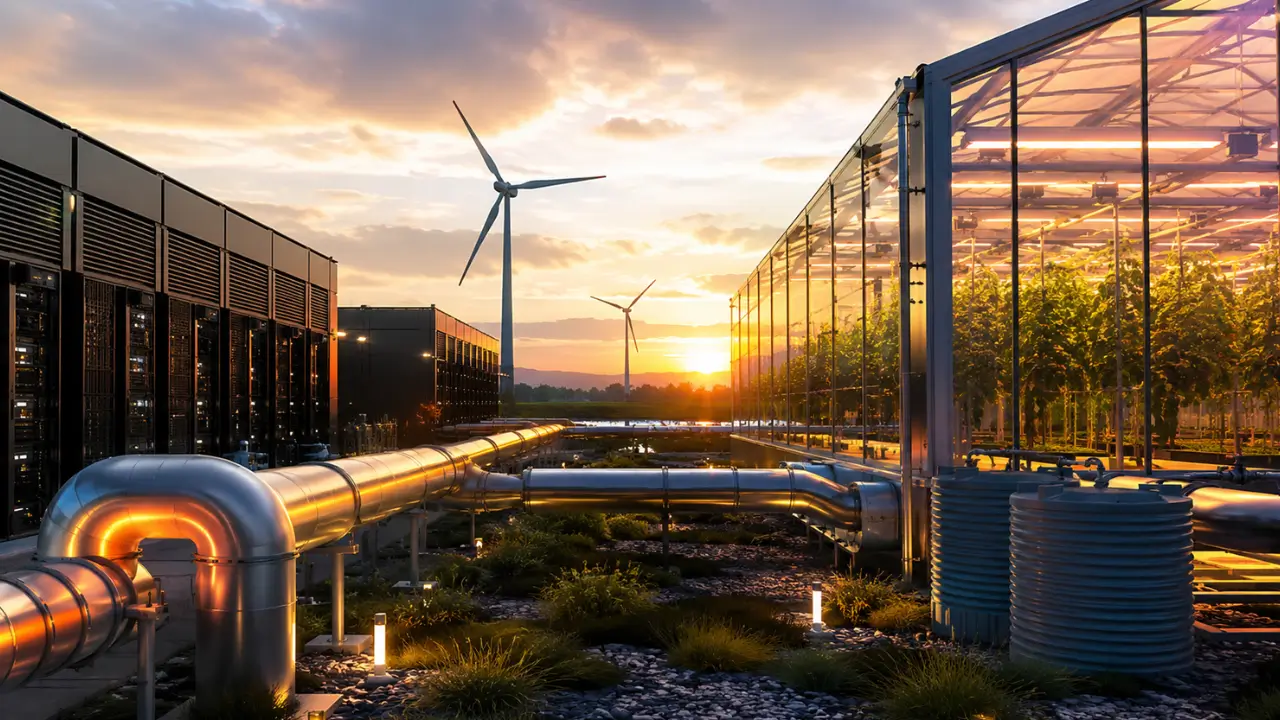
Hectare-Watt Land Economics is redefining how infrastructure land is evaluated as digital infrastructure and controlled-environment agriculture increasingly identify complementary value within the same parcel rather than treating it as a single-purpose asset. Land markets have historically evolved as new industries introduce different infrastructure requirements, and some periods of change have occurred when multiple sectors identify productive uses for the same land under compatible operational conditions. Excess thermal energy, utility interconnections, water management systems, and logistics corridors increasingly influence planning and site-selection discussions for integrated compute-greenhouse developments alongside traditional commercial real estate considerations. These operational relationships have encouraged planners, valuation professionals, environmental engineers, and infrastructure developers to evaluate productive acreage using both conventional land characteristics and infrastructure compatibility, particularly where electrical capacity has become a primary constraint for digital infrastructure development.

Land has historically represented a fixed production asset whose value reflected location, access, regulatory certainty, and surrounding commercial activity, yet digital infrastructure continues introducing additional layers of economic productivity that remain largely absent from traditional appraisal practices. Modern compute campuses increasingly provide opportunities beyond computational capacity through recoverable heat streams, engineered infrastructure redundancy, resilient utility design, and energy management systems that can support compatible neighboring operations. Greenhouse agriculture presents one of the most technically compatible examples because controlled growing environments require stable thermal conditions throughout changing seasonal cycles without necessarily demanding combustion-based heating systems. Where integrated thermal reuse is implemented, that compatibility allows adjacent acreage to function as a coordinated operational ecosystem rather than as entirely independent commercial parcels. The economic relationship extends beyond physical colocation because long-term resource-sharing arrangements can influence the operational value of both participating developments.
When BTUs Meet Basil: Why Acres Now Have Dual Yields
For decades, waste heat occupied an uncomfortable position within infrastructure planning because engineers primarily viewed it as an operational by-product requiring safe rejection rather than productive utilization. Cooling technologies therefore evolved around efficient heat removal instead of maximizing downstream value creation through thermal integration with neighboring activities. Recent developments in district heating, industrial symbiosis, and controlled-environment agriculture have gradually altered that perspective by demonstrating that low-grade thermal energy retains commercial usefulness when appropriate demand exists nearby. Greenhouse production represents one of the few land-intensive activities capable of directly absorbing continuous thermal output without requiring extensive energy conversion processes before practical application. Controlled growing environments benefit from predictable temperatures that support crop consistency throughout changing weather conditions while reducing dependence upon conventional heating systems where technical conditions permit.
Traditional industrial planning generally optimized individual sites without examining whether neighboring developments could convert operational by-products into productive resources through coordinated infrastructure design. Compute-greenhouse colocation introduces a fundamentally different planning philosophy because heat recovery pipelines, utility corridors, water management systems, and maintenance access become shared infrastructure considerations from the earliest design stages. In integrated developments, the land functions as a shared infrastructure platform supporting coordinated resource exchange between adjacent operations. Engineers increasingly evaluate thermal transport distances alongside electrical interconnections because excessive pipeline length gradually reduces the commercial attractiveness of waste heat recovery despite technical feasibility. Site geometry consequently affects economic performance through mechanisms that conventional industrial developments rarely considered during acquisition or planning decisions.
Digital Heat Becomes a Productive Land Resource
This approach encourages infrastructure planners to distinguish between sites intended solely for digital infrastructure and those capable of supporting coordinated thermal reuse with compatible neighboring operations. The distinction appears subtle during preliminary planning although it becomes increasingly significant as thermal reuse infrastructure requires easements, maintenance corridors, redundancy planning, and coordinated operational governance across multiple landowners. Greenhouse operators similarly evaluate adjacent compute developments according to thermal reliability rather than simply examining proximity to transportation or utility infrastructure because temperature consistency directly affects controlled agricultural production. Both industries therefore begin negotiating long-term operational relationships before construction begins, allowing physical site planning to reflect future resource sharing rather than independent development pathways. Land supporting practical resource circulation can provide additional strategic value alongside its conventional role as a location for infrastructure investment.
Underwriting Land Around Combined Output Rather Than Single Occupancy
Commercial land underwriting traditionally focused upon occupancy certainty, infrastructure access, regulatory compliance, and projected market demand because those variables historically determined long-term investment performance across industrial real estate markets. The emergence of compute-greenhouse colocation introduces another evaluation layer where resource interoperability becomes almost as significant as physical location during acquisition analysis. Financial stakeholders increasingly recognize that a parcel capable of sustaining coordinated digital and agricultural production possesses characteristics unavailable within isolated developments lacking compatible neighboring activities. Long-term value therefore depends not only upon what occupies the site today but also upon whether future infrastructure relationships remain technically expandable without substantial redevelopment. Infrastructure flexibility gradually becomes embedded within land negotiations because thermal integration systems often require easements, service corridors, equipment access, and coordinated maintenance arrangements extending beyond traditional property boundaries.

Underwriting models increasingly examine the durability of thermal demand because greenhouse operations require predictable environmental conditions over extended production cycles rather than intermittent access to surplus heat. Data centers likewise seek confidence that neighboring agricultural operations possess sufficient operational continuity to justify long-lived thermal recovery investments whose commercial returns accumulate gradually through infrastructure utilization. Both sectors therefore evaluate each other’s resilience alongside traditional property risks because the economic relationship depends upon sustained operational compatibility instead of one-time infrastructure installation. Land negotiations consequently extend beyond purchase price discussions into long-term resource governance frameworks that establish responsibilities surrounding maintenance, infrastructure upgrades, access rights, and thermal delivery reliability. Legal documentation increasingly reflects operational interdependence despite separate ownership structures because infrastructure continuity becomes essential to preserving anticipated land value over time.
Zoning Whiplash: From Industrial to Agri-Tech Hybrid
Municipal planning systems developed around the assumption that land uses could be separated into relatively stable categories whose operational impacts remained predictable across decades of development. Industrial districts concentrated manufacturing and logistics, agricultural zones preserved cultivation, and commercial corridors supported business activity with limited overlap between those classifications. Compute-greenhouse colocation challenges those assumptions because one integrated development can simultaneously consume utility-scale electricity, recover industrial-grade thermal energy, cultivate food crops, manage advanced water systems, and operate highly automated digital infrastructure. Traditional zoning language rarely anticipated that these activities would become operationally dependent upon one another rather than simply occupying neighboring parcels. Local planning authorities therefore encounter increasingly complex questions about how existing ordinances should interpret developments that satisfy the functional characteristics of several zoning classes without fitting comfortably into any single one.
Planning uncertainty extends beyond land classification because permitting authorities frequently assign different review pathways, environmental requirements, infrastructure obligations, and public consultation processes according to the designated primary use of a proposed development. Greenhouse agriculture may qualify for one regulatory framework, while high-density digital infrastructure typically enters an entirely different permitting sequence with separate technical review criteria. Hybrid projects therefore require planning officials to determine whether one activity should dominate regulatory treatment or whether an entirely new interpretive framework better reflects operational reality. Those decisions influence utility approvals, transportation assessments, environmental evaluations, emergency response planning, stormwater management, and long-term development agreements across the entire site. Additional interpretive decisions can result in different regulatory outcomes between municipalities because planning authorities apply local ordinances, policies, and administrative procedures within their respective jurisdictions.
Hybrid Land Uses Challenge Conventional Planning Categories
Conventional zoning systems generally classify development according to its dominant activity because planners historically expected land uses to perform relatively distinct economic and operational functions throughout their lifecycle. Manufacturing produced goods, agriculture cultivated crops, utilities distributed essential services, and commercial districts supported customer-oriented activities with clearly differentiated infrastructure demands. Compute-greenhouse colocation complicates that framework because digital operations generate thermal resources that directly sustain agricultural production, creating an interdependent relationship instead of parallel land uses sharing a boundary. The operational identity of the property therefore becomes difficult to define through a single zoning classification because both activities continuously influence one another through engineered infrastructure rather than incidental proximity. Questions quickly emerge regarding setbacks, allowable accessory structures, service corridors, emergency access, environmental controls, and future expansion rights because each regulatory category applies different technical assumptions.
Overlay zoning has emerged in several planning contexts as a mechanism for accommodating infrastructure combinations that traditional classifications cannot adequately represent without rewriting entire municipal codes. Similar approaches may become increasingly relevant where compute-greenhouse developments require coordinated standards governing thermal pipelines, utility easements, water reuse systems, environmental monitoring, and operational separation between digital equipment and agricultural production areas. Such overlays preserve existing zoning structures while introducing project-specific performance criteria that reflect integrated infrastructure rather than isolated land uses. Regulatory flexibility nonetheless requires careful drafting because ambiguous provisions often generate inconsistent interpretation during permitting, inspection, or future ownership transitions. Well-structured regulatory instruments reduce uncertainty by describing how integrated land uses satisfy planning objectives without forcing authorities to reinterpret unrelated industrial or agricultural provisions on a case-by-case basis.
Permit Risk Emerges as a New Site-Selection Variable
Infrastructure developers traditionally prioritized electrical availability, fiber connectivity, transportation access, environmental suitability, and construction feasibility when evaluating candidate sites for large-scale digital investments. Regulatory certainty certainly influenced those decisions, although established industrial zoning generally reduced permitting unpredictability because project categories remained familiar to planning authorities. Compute-greenhouse colocation introduces a different level of regulatory exposure because permitting agencies frequently encounter integrated infrastructure proposals that extend beyond established review practices without fitting comfortably into existing administrative workflows. Approval timelines therefore depend not only upon statutory requirements but also upon institutional familiarity with emerging operational models combining digital infrastructure and controlled-environment agriculture. Municipal experience with integrated infrastructure can improve procedural consistency when reviewing technically comparable applications under existing planning frameworks.
Environmental review presents another dimension of permit risk because integrated developments frequently involve interconnected water management systems, thermal distribution networks, backup energy infrastructure, stormwater controls, and agricultural production environments operating within a coordinated design philosophy. Regulatory agencies may request additional technical documentation explaining how resource exchanges function across property boundaries while ensuring compliance with existing environmental obligations. Such requests do not necessarily indicate opposition to the project but instead reflect the need to evaluate operational interactions that conventional industrial reviews rarely examined in comparable detail. Early technical engagement therefore becomes increasingly valuable because infrastructure designers can address regulatory questions before formal review periods begin rather than responding after documentation enters statutory approval processes. Collaborative planning often produces greater certainty by allowing authorities to understand engineering intent before administrative interpretations become fixed through official determinations.
Appraisal Models Break: Pricing Dirt with Downstream Heat Contracts
Land appraisal has long depended upon the principle that comparable transactions reveal the most reliable indication of market value because similar properties generally reflect similar economic potential under equivalent conditions. That principle becomes increasingly difficult to apply when infrastructure projects generate revenue streams extending well beyond the physical characteristics of the underlying parcel. Compute-greenhouse colocation introduces a circumstance where land value derives not only from location, utility access, and development rights but also from the ability to sustain contractual thermal exchanges over many years. A parcel supporting recoverable heat distribution may therefore possess economic characteristics that neighboring industrial land cannot replicate despite sharing identical zoning and geographic location. Traditional comparable sales consequently provide only a partial picture because they rarely capture the operational significance of long-term resource integration between digital infrastructure and controlled-environment agriculture.
The emergence of downstream heat agreements introduces a contractual layer that conventional industrial valuation models seldom address because thermal offtake has historically remained peripheral to most commercial property transactions. Where greenhouse operators commit to utilizing recovered heat through long-term operational agreements, the associated land effectively supports an additional economic function that influences both infrastructure utilization and operational resilience. Those agreements do not simply represent service contracts because they can affect site planning decisions, capital investment, infrastructure maintenance obligations, and future redevelopment flexibility throughout the operational lifespan of both adjoining activities. Valuation professionals therefore confront the challenge of distinguishing between improvements attached to the land and contractual arrangements that influence its productive capacity without permanently altering physical characteristics.
Comparable Sales Lose Precision When Infrastructure Creates New Value Layers
Comparable sales analysis remains one of the most widely accepted approaches to commercial land valuation because it reflects observable market behavior rather than hypothetical financial projections or engineering assumptions. The method performs effectively when similar parcels share equivalent development rights, infrastructure access, environmental conditions, and market demand because those similarities support meaningful transactional comparisons. Compute-greenhouse colocation gradually weakens that assumption by introducing integrated operational characteristics that seldom appear within historical transaction datasets. A parcel connected to long-term thermal utilization infrastructure cannot easily be compared with another industrial site that lacks compatible neighboring demand, even when both properties occupy similar geographic locations and possess comparable utility connections. Observable transactions therefore become increasingly heterogeneous because integrated resource relationships influence land performance beyond conventional site characteristics recognized by existing appraisal frameworks.
Thermal infrastructure also creates valuation considerations extending beyond immediate site boundaries because recoverable heat frequently depends upon neighboring land remaining available for compatible long-term agricultural use. The productive capacity of one parcel may therefore rely partly upon conditions existing outside its legal boundaries, introducing interdependency rarely encountered within traditional industrial valuation practice. Comparable transactions seldom capture these external operational relationships because conventional industrial developments generally function independently after construction reaches completion. Integrated infrastructure instead requires appraisers to evaluate easements, access arrangements, utility coordination, maintenance responsibilities, and contractual obligations that collectively influence ongoing land productivity. Each of these elements contributes to functional performance without necessarily appearing within headline transaction values, making detailed due diligence increasingly important during valuation assignments.
Assessors Explore New Inputs Beyond Conventional Land Characteristics
Assessment methodologies traditionally emphasize measurable land attributes such as parcel dimensions, legal access, permitted use, utility availability, environmental condition, and surrounding market activity because those characteristics consistently influence commercial property performance across diverse asset classes. Compute-greenhouse colocation encourages assessors to examine whether integrated infrastructure introduces additional factors that materially affect long-term land productivity without fundamentally changing those established principles. Thermal distribution corridors, recoverable energy systems, operational interoperability, infrastructure resilience, and documented resource-sharing agreements increasingly attract attention because they influence how efficiently a site functions within a broader production ecosystem. These considerations do not replace traditional assessment criteria but instead supplement them where technical evidence demonstrates a measurable relationship between integrated infrastructure and operational performance. Assessors therefore evaluate whether new variables improve valuation accuracy while preserving fairness across comparable properties that may not possess equivalent resource-sharing opportunities.
Infrastructure durability also becomes relevant because thermal exchange systems often represent long-lived capital investments requiring coordinated maintenance between multiple operational stakeholders over extended periods. Assessors may therefore examine engineering documentation describing pipeline routing, maintenance responsibilities, redundancy planning, and operational governance to understand how integrated infrastructure contributes to sustained land functionality. Such review differs from evaluating ordinary site improvements because the productive significance of thermal systems depends upon continued interaction between adjoining developments rather than isolated physical condition alone. Documentation quality consequently assumes greater importance because clearly defined operational responsibilities reduce uncertainty surrounding future infrastructure performance and associated land utility. Reliable records assist valuation professionals in distinguishing durable operational characteristics from temporary commercial arrangements that may not meaningfully influence long-term assessment outcomes.
Property Tax Reclassified: Paying Mill Rates for Megawatts and Microgreens
Property taxation has traditionally reflected clearly defined categories that distinguish industrial operations, agricultural production, commercial development, and public utility infrastructure because each classification carries different assumptions regarding land use, economic activity, and public service requirements. Compute-greenhouse colocation introduces a more nuanced situation where a single development simultaneously performs functions associated with several of those categories without fitting neatly into any one of them. Digital infrastructure supports high-density computational activity while greenhouse production generates agricultural output through controlled environmental systems that may rely upon recovered thermal energy from the adjoining compute operation. Existing tax frameworks rarely anticipated such integrated operational relationships because they evolved around discrete land uses whose productive activities remained largely independent throughout the life of the property. Assessors therefore face increasingly complex decisions regarding whether hybrid developments should inherit the tax treatment of their dominant activity or whether integrated resource sharing justifies a different analytical approach.
Tax classification also shapes investment behavior because developers frequently evaluate long-term fiscal predictability alongside utility access, environmental permitting, and infrastructure readiness before committing significant capital to integrated projects. A classification that unexpectedly changes after construction may alter operational economics even when the physical infrastructure performs exactly as originally designed. Hybrid developments therefore benefit from early engagement with assessment authorities to clarify how thermal pipelines, greenhouse structures, digital infrastructure, utility improvements, and shared resource systems will be interpreted under applicable taxation rules. Transparent communication reduces uncertainty by allowing stakeholders to align engineering decisions with established assessment practices before permanent investments proceed. Jurisdictions likewise benefit from regulatory clarity because consistent treatment strengthens investment confidence without requiring preferential tax arrangements for emerging infrastructure models. Stable assessment principles ultimately encourage better planning by ensuring that operational innovation does not become overshadowed by avoidable fiscal ambiguity.
Hybrid Infrastructure Challenges Traditional Assessment Categories
Conventional property taxation generally begins by identifying the principal use of the land because assessment systems rely upon standardized classifications that support consistency across thousands of individual properties within a jurisdiction. Industrial facilities typically receive one treatment, agricultural land another, and utility infrastructure often follows specialized statutory provisions reflecting its operational characteristics. Compute-greenhouse colocation complicates that sequence because neither activity functions independently once thermal integration becomes a permanent component of site operations. The greenhouse relies upon recoverable heat originating from digital infrastructure, while the compute operation derives additional operational efficiency through productive resource utilization that extends beyond its property boundary. Both activities therefore contribute to a shared economic ecosystem whose physical infrastructure often crosses traditional functional distinctions recognized within taxation frameworks. Assessment authorities increasingly examine whether existing statutory language adequately reflects those integrated relationships without creating inconsistent outcomes across comparable hybrid developments.
The question extends beyond assigning a tax label because classification frequently influences how improvements, equipment, support infrastructure, and associated land value enter the overall assessment process. Greenhouse structures may qualify under one valuation methodology while high-density compute buildings follow another, even though both depend upon interconnected thermal infrastructure operating continuously across the site. Shared systems such as distribution pipelines, monitoring equipment, utility interfaces, and thermal exchange components rarely fit comfortably within traditional single-purpose asset categories. Assessors therefore evaluate how integrated improvements contribute to overall land productivity while remaining consistent with legislative intent governing property taxation. Technical documentation becomes increasingly valuable because engineering design often clarifies whether specific infrastructure primarily supports industrial activity, agricultural production, or genuinely integrated resource exchange. Accurate classification ultimately depends upon understanding operational relationships rather than relying solely upon visual characteristics of the physical improvements present on the site.
Fiscal Predictability Becomes a Competitive Infrastructure Advantage
Infrastructure investment increasingly favors jurisdictions capable of providing stable regulatory environments because long-lived projects depend upon predictable operating conditions extending well beyond initial construction periods. Property taxation represents one element of that broader investment landscape because annual assessment outcomes directly influence lifecycle operating costs across compute-greenhouse developments designed to function for many years. Developers therefore examine not only prevailing tax rates but also the transparency, consistency, and interpretive stability of assessment methodologies applicable to integrated infrastructure. Clear administrative guidance reduces uncertainty by allowing engineering teams, financial institutions, and operational partners to incorporate realistic fiscal assumptions into project planning from the earliest development stages. Predictable assessment practices consequently become part of broader site-selection strategies alongside electrical capacity, water availability, transportation connectivity, and permitting certainty.
Assessment consistency also supports financing because lenders and long-term investors generally prefer environments where recurring operational costs remain reasonably foreseeable under established legal frameworks. Unexpected classification changes following project completion may affect projected cash flows despite unchanged technical performance, introducing financial uncertainty unrelated to operational execution. Integrated infrastructure therefore benefits when assessment authorities publish clear interpretive guidance describing how hybrid land uses, shared thermal systems, and interconnected improvements will be evaluated throughout the assessment lifecycle. Such guidance allows market participants to distinguish genuine fiscal obligations from speculative assumptions that sometimes accompany unfamiliar infrastructure models. Transparency strengthens confidence because all stakeholders operate from the same publicly understood administrative framework rather than relying upon informal expectations or inconsistent precedent.
Soil vs. Slab: Remediation Costs When Farms and Facilities Share Fences
The physical boundary between a data center campus and a controlled-environment greenhouse appears straightforward on a site plan, yet that boundary often represents one of the most technically sensitive interfaces within an integrated hectare-watt development. Concrete foundations, utility corridors, drainage systems, underground services, and thermal distribution networks occupy land that may directly adjoin productive growing environments requiring strict environmental control. Greenhouse operations prioritize substrate quality, water purity, contaminant management, and biosecurity because plant production depends upon stable growing conditions that extend well beyond the greenhouse envelope itself. Digital infrastructure, meanwhile, emphasizes structural stability, underground utility resilience, stormwater management, and long-term operational continuity that frequently require substantial engineered ground improvements. Both objectives remain technically compatible, although their coexistence demands careful planning because environmental conditions beneath and around each activity influence the performance of the other over extended operational periods.
Remediation strategy increasingly influences site economics because many attractive infrastructure locations occupy previously developed industrial land where existing utility access, transportation links, and electrical connectivity already support large-scale investment. Brownfield redevelopment offers significant advantages for digital infrastructure by reducing pressure on undeveloped land while utilizing established infrastructure corridors that often remain commercially valuable. Greenhouse operators, however, require confidence that historical contamination, soil disturbance, groundwater conditions, and residual pollutants will not compromise agricultural production or environmental compliance, even when cultivation occurs within controlled structures. Comprehensive environmental assessment therefore becomes essential before integrated development proceeds because each operational component evaluates land suitability through different technical criteria despite sharing the same geographic footprint. Engineering teams, environmental consultants, and remediation specialists increasingly collaborate during early planning phases to align infrastructure design with environmental performance expectations rather than addressing compatibility concerns after construction begins.
Brownfield Redevelopment Requires Dual Environmental Standards
Brownfield redevelopment has become an important component of contemporary infrastructure planning because previously developed land frequently offers established utility connections, transportation access, and regulatory familiarity that reduce certain development challenges compared with entirely undeveloped sites. Digital infrastructure often benefits from those characteristics because electrical substations, road networks, and industrial service corridors already exist within many former commercial or manufacturing districts. Controlled-environment agriculture introduces additional environmental considerations because greenhouse operators evaluate not only structural suitability but also surrounding land conditions that may influence water management, soil stability, environmental quality, and long-term operational confidence. Although greenhouse cultivation frequently occurs within engineered growing systems rather than native soil, adjacent environmental conditions still influence stormwater management, groundwater protection, construction practices, and broader environmental stewardship obligations. Site investigations therefore expand beyond conventional structural assessments to include historical land use reviews, contamination studies, hydrogeological evaluations, and remediation planning capable of supporting both operational models simultaneously.
Engineering solutions often address environmental constraints through careful site design rather than assuming complete separation between digital infrastructure and agricultural production areas. Protective barriers, engineered drainage systems, impermeable containment measures, groundwater monitoring networks, and carefully planned utility corridors help maintain operational integrity across neighboring activities without compromising long-term environmental performance. These design strategies recognize that successful integration depends upon preventing environmental interactions before they occur instead of relying exclusively upon future remediation should unexpected conditions emerge. Environmental consultants therefore collaborate closely with civil engineers, geotechnical specialists, utility planners, and agricultural designers to establish site layouts supporting durable environmental resilience throughout construction and operation. Documentation generated during these planning stages frequently becomes an important reference for future maintenance, regulatory inspections, ownership transitions, and environmental reporting obligations.
Shared Boundaries Demand Integrated Environmental Governance
Operational boundaries within compute-greenhouse developments rarely align perfectly with environmental processes because groundwater movement, drainage patterns, subsurface utilities, and ecological conditions naturally extend beyond property lines and engineered structures. Environmental governance therefore focuses on managing interconnected systems rather than treating each parcel as an isolated operational entity unaffected by neighboring activities. Shared infrastructure such as thermal pipelines, water conveyance systems, utility corridors, monitoring equipment, and maintenance routes reinforces that interdependence because environmental performance increasingly depends upon coordinated oversight across multiple operational stakeholders. Governance frameworks consequently define inspection schedules, maintenance responsibilities, documentation standards, communication protocols, and emergency response procedures before infrastructure enters service. These arrangements reduce uncertainty by establishing common operational expectations that remain applicable regardless of future ownership changes or infrastructure expansion.
Biosecurity introduces another important governance consideration because controlled-environment agriculture depends upon carefully managed growing environments designed to minimize biological contamination while supporting consistent crop production. Construction activities, maintenance operations, utility repairs, and infrastructure upgrades occurring near greenhouse operations therefore require procedural coordination that protects agricultural environments without interrupting critical digital services. Access management, equipment cleaning procedures, material handling practices, and operational scheduling frequently form part of integrated governance documentation to reduce unnecessary environmental exposure across adjoining activities. These measures reflect operational prudence rather than extraordinary precaution because shared infrastructure naturally increases interaction between personnel, equipment, and environmental systems operating across the site.
The “Stranded Acre” Problem in Resource-Symbiotic Site Selection
Infrastructure site selection has traditionally emphasized the suitability of an individual parcel because project success largely depended upon characteristics contained within clearly defined property boundaries. Reliable electricity, transportation access, utility connectivity, environmental compliance, and constructability generally determined whether land could support large-scale digital infrastructure without requiring extensive off-site modifications. Compute-greenhouse colocation introduces another dimension because neighboring land increasingly influences the productive value of the primary parcel through its capacity to absorb recovered heat and support complementary agricultural operations. A technically excellent compute site may therefore lose part of its strategic advantage if surrounding acreage cannot accommodate compatible thermal utilization despite satisfying every conventional infrastructure requirement. Site evaluation consequently extends beyond parcel-level optimization toward landscape-level compatibility where adjacent land uses contribute directly to long-term operational performance.
The concept of the stranded acre reflects this emerging planning challenge because land that appears commercially attractive under conventional evaluation criteria may struggle to realize its full economic potential without neighboring properties capable of participating in resource-sharing relationships. Thermal energy loses practical value when economically viable distribution opportunities remain unavailable within technically reasonable distances, leaving recoverable heat underutilized despite efficient digital operations. Greenhouse agriculture represents one potential recipient of that thermal resource, although the surrounding landscape must support compatible planning policies, environmental conditions, infrastructure corridors, and operational partnerships before integration becomes feasible. Those requirements elevate regional planning considerations that historically occupied a secondary position during digital infrastructure acquisition.
Neighboring Land Becomes an Operational Infrastructure Asset
Digital infrastructure has historically treated neighboring properties primarily as external conditions influencing access, security, environmental compliance, and future expansion opportunities rather than as active contributors to operational performance. Compute-greenhouse integration gradually changes that perspective because adjoining land may directly determine whether recoverable thermal energy becomes a productive asset or remains an unused operational by-product. Agricultural compatibility, environmental suitability, infrastructure accessibility, and planning stability therefore become characteristics extending beyond the boundaries of the primary development site. Engineers and planners increasingly evaluate surrounding parcels for their long-term capacity to support complementary activities capable of integrating with digital infrastructure through practical resource exchange. This broader assessment does not require common ownership because operational compatibility often depends more upon coordinated planning than unified property control.
Infrastructure corridors reinforce this relationship because thermal pipelines, maintenance access routes, monitoring systems, and supporting utilities frequently require coordinated passage across multiple properties before recovered heat reaches productive end users. Easements, access agreements, maintenance responsibilities, and future expansion rights consequently become important components of early site evaluation despite remaining largely invisible within conventional parcel descriptions. The feasibility of those arrangements depends upon cooperative landowners, compatible planning policies, engineering practicality, and durable legal documentation capable of supporting infrastructure throughout its operational life. Developers therefore examine surrounding ownership patterns and land-use trajectories alongside engineering characteristics because future infrastructure continuity depends upon maintaining reliable access across interconnected landscapes. Regional compatibility thus becomes an investment consideration rather than merely a planning preference because fragmented land control may significantly reduce opportunities for productive thermal integration.
Fragmented Land Markets Reduce Resource Efficiency
Land fragmentation has traditionally influenced agriculture, transportation, and urban development by increasing coordination complexity across multiple ownership structures with differing commercial objectives. Compute-greenhouse ecosystems introduce a comparable challenge because integrated thermal utilization frequently depends upon maintaining continuous infrastructure corridors between computational heat sources and agricultural demand. Fragmented ownership does not automatically prevent resource sharing, although it often increases negotiation requirements involving easements, operational responsibilities, maintenance access, environmental oversight, and future infrastructure modifications. Every additional interface introduces administrative complexity that may gradually affect project feasibility despite unchanged engineering capability. Site selection therefore increasingly considers governance practicality alongside technical suitability because successful integration depends upon durable cooperation extending throughout the operational lifespan of shared infrastructure.
Competing development pressures may also strand otherwise valuable acreage by introducing incompatible neighboring land uses that interrupt opportunities for future thermal integration. Commercial expansion, transportation infrastructure, residential development, or unrelated industrial activity can gradually occupy land that might otherwise have supported controlled-environment agriculture adjacent to digital infrastructure. Those changes do not diminish the operational quality of the compute campus itself, although they may reduce opportunities to convert recoverable heat into productive economic output over time. Regional planning consequently becomes increasingly significant because preserving compatible land-use patterns supports infrastructure flexibility that individual developers cannot achieve independently through parcel acquisition alone. Strategic planning policies therefore influence long-term resource productivity by maintaining opportunities for future integration before incompatible development permanently alters surrounding landscapes.
Insurance Maps Redrawn: Underwriting Risk at the Agri-Compute Boundary
Insurance underwriting has historically relied upon relatively stable assumptions regarding property function because industrial facilities, agricultural operations, logistics centers, and commercial developments each presented recognizable exposure profiles shaped by decades of claims experience. Digital infrastructure emphasizes uninterrupted service, electrical resilience, fire protection, and equipment reliability, while controlled-environment agriculture prioritizes biological stability, environmental consistency, water management, and crop protection under carefully controlled conditions. Neither activity inherently increases the other’s operational risk, although their physical proximity requires insurers to understand how interconnected infrastructure influences loss scenarios that extend beyond traditional property boundaries. Risk assessment therefore becomes more multidisciplinary because engineering resilience, environmental management, operational governance, and infrastructure interdependence collectively shape overall insurability. The hectare-watt model consequently encourages insurers to evaluate integrated operational systems instead of relying exclusively upon historical assumptions associated with isolated land uses.
Climate-related hazards further reinforce this evolution because flood exposure, extreme weather resilience, drainage capacity, and infrastructure redundancy increasingly affect both digital operations and greenhouse production despite their differing operational objectives. A resilient drainage system protects critical electrical infrastructure while simultaneously preserving controlled agricultural environments from water intrusion or environmental instability. Shared infrastructure therefore introduces common resilience requirements that encourage coordinated engineering rather than separate protective measures developed independently by neighboring landowners. Insurers increasingly examine site-wide resilience strategies because integrated planning often reduces cumulative exposure more effectively than isolated protective investments confined within individual property boundaries. Engineering documentation demonstrating coordinated infrastructure design, maintenance governance, and environmental monitoring can therefore strengthen underwriting confidence by illustrating systematic rather than fragmented risk management.
Integrated Infrastructure Expands Traditional Risk Assessment
Traditional commercial underwriting generally evaluates exposure according to clearly identifiable operational categories because those classifications provide established actuarial experience, engineering guidance, and loss-prevention practices developed across many years of commercial activity. Compute-greenhouse integration encourages insurers to supplement those familiar approaches with broader assessments examining how shared infrastructure influences operational resilience throughout interconnected developments. Thermal pipelines, utility interfaces, environmental monitoring systems, water management networks, and coordinated maintenance programs create relationships that extend beyond the physical footprint of any individual structure. Those relationships do not necessarily introduce additional hazards, although they require underwriters to understand how infrastructure dependencies may influence incident response, operational recovery, and long-term system resilience.
Fire protection illustrates the importance of integrated assessment because digital infrastructure typically employs specialized suppression strategies designed to protect sensitive electronic equipment, while greenhouse operations emphasize safeguarding biological production environments and supporting mechanical systems. Shared thermal infrastructure connecting those activities requires careful engineering to ensure maintenance access, operational isolation, and emergency procedures remain clearly defined throughout the site. Underwriters therefore review compartmentalization strategies, monitoring systems, inspection programs, and infrastructure redundancy to understand how localized incidents remain contained without disrupting interconnected operations unnecessarily. Such evaluations align closely with established engineering risk management principles because effective separation of operational systems has long supported resilient industrial development across multiple sectors.
Biosecurity and Environmental Exposure Enter Digital Risk Conversations
Environmental exposure similarly expands beyond conventional pollution considerations because drainage systems, groundwater management, thermal distribution infrastructure, and stormwater controls frequently support both operational components through coordinated engineering. Underwriters evaluate how those shared systems perform during severe weather events, maintenance activities, or infrastructure failures because interconnected environmental performance contributes directly to overall site resilience. Engineering redundancy, monitoring capability, inspection frequency, and documented maintenance procedures therefore assist insurers in understanding whether integrated infrastructure remains capable of maintaining environmental stability under varying operational conditions. These assessments rely upon familiar engineering concepts emphasizing prevention, resilience, and systematic maintenance rather than introducing entirely new categories of insurance exposure. The hectare-watt model highlights that environmental management increasingly supports both infrastructure performance and insurability through coordinated operational planning.
Future underwriting practices will likely continue evolving through accumulated operational experience as integrated compute-greenhouse developments mature across additional markets and jurisdictions. Insurers traditionally refine risk evaluation by incorporating documented engineering performance, observed operational outcomes, and evolving technical standards rather than responding solely to emerging technological concepts. The gradual expansion of hectare-watt developments therefore provides opportunities to strengthen underwriting guidance using evidence generated through practical infrastructure operation over time. Collaboration between insurers, engineers, infrastructure operators, environmental specialists, and risk consultants may further improve understanding of how integrated systems perform under routine conditions as well as during unexpected operational events. Such knowledge supports more consistent insurance evaluation while encouraging resilient infrastructure design grounded in documented operational experience. Insurance maps will consequently continue reflecting the growing importance of interconnected infrastructure relationships as digital and agricultural systems increasingly share the same productive landscapes.
Hectare-Watt Futures: Will Land Markets Price In Thermal Arbitrage?
Land markets have historically rewarded characteristics that remain relatively stable across long investment horizons, including transportation access, reliable utilities, favorable planning policy, environmental suitability, and proximity to commercial demand. Compute-greenhouse colocation introduces another possibility where future land competitiveness may increasingly reflect the ability to circulate energy resources between neighboring activities instead of evaluating each operational system independently. Thermal energy has traditionally remained a necessary consequence of digital infrastructure, although integrated planning increasingly treats recoverable heat as an operational input capable of supporting adjacent productive activity under appropriate technical conditions. That evolution encourages market participants to examine whether land located near compatible thermal demand should gradually command distinct strategic value compared with otherwise similar parcels lacking comparable integration opportunities. The hectare-watt framework therefore represents less a prediction of future land markets than a practical analytical lens through which emerging infrastructure relationships can be evaluated with greater precision.
Thermal arbitrage in this context does not describe financial trading in the conventional sense but instead reflects the practical economic advantage created when recoverable heat acquires productive downstream application rather than remaining an unavoidable operational by-product. Greenhouse agriculture offers one technically compatible destination because stable thermal demand aligns with the continuous operational profile of modern compute environments under carefully engineered conditions. Land capable of supporting that interaction may gradually distinguish itself through operational flexibility rather than simple scarcity because integrated resource circulation enhances infrastructure efficiency without requiring additional energy generation. Investors therefore examine whether long-term development value increasingly depends upon compatibility between surrounding land uses rather than independent parcel characteristics alone. Regional planning, environmental stewardship, infrastructure governance, and engineering coordination all contribute to determining whether such compatibility remains commercially sustainable across extended operational lifecycles.
Resource Interdependence May Influence Long-Term Land Pricing
Commercial real estate markets rarely introduce new valuation considerations without sustained operational evidence demonstrating that additional characteristics consistently influence long-term investment performance across multiple transactions. The emergence of compute-greenhouse ecosystems therefore does not automatically imply that thermal compatibility will become an independently traded land attribute within every regional market. Instead, valuation professionals, investors, planners, and infrastructure operators increasingly observe whether integrated developments consistently outperform comparable isolated projects through measurable operational resilience, infrastructure utilization, and resource efficiency. Should those relationships continue strengthening over time, land situated within compatible infrastructure ecosystems may gradually attract differentiated market attention based upon documented performance rather than conceptual innovation. The hectare-watt framework therefore encourages careful observation of evolving commercial behavior instead of assuming predetermined pricing outcomes unsupported by operational experience.
Regional infrastructure planning may play an equally important role because thermal integration depends upon preserving compatible land-use patterns capable of supporting future resource exchange across neighboring developments. Utility corridors, environmental management systems, transportation access, planning certainty, and agricultural suitability collectively influence whether integrated infrastructure remains economically practical throughout changing market conditions. Land pricing consequently reflects not only the physical quality of an individual parcel but also the resilience of the broader operational environment supporting long-term resource circulation. Investors increasingly recognize that ecosystem durability often contributes as much to infrastructure performance as engineering quality within the primary development itself. Coordinated regional planning therefore strengthens commercial confidence by protecting future integration opportunities before fragmented development permanently limits operational flexibility.
The Hectare-Watt as a Strategic Planning Lens Rather Than a Measurement Standard
The hectare-watt should not be interpreted as a formal engineering unit or standardized financial metric because no internationally recognized valuation framework currently defines land productivity through that terminology. Instead, the concept provides a practical way of describing how modern infrastructure increasingly combines digital production, thermal recovery, environmental management, agricultural compatibility, and long-term resource coordination within the same geographic landscape. Such framing helps planners, engineers, investors, environmental specialists, insurers, and valuation professionals discuss integrated land performance without relying exclusively upon terminology developed for isolated industrial developments. The analytical strength of the concept lies in its ability to connect several operational disciplines into a common discussion centered upon land productivity rather than introducing an entirely new measurement methodology. The hectare-watt therefore functions best as an interdisciplinary planning framework capable of organizing complex infrastructure interactions into a coherent land-use narrative.
Strategic planning increasingly favors adaptable infrastructure because technological development, energy systems, environmental expectations, and regional economic priorities continue evolving throughout the operational lifespan of large-scale digital investments. Land capable of supporting flexible resource integration may therefore retain greater strategic relevance than parcels optimized exclusively for single-purpose infrastructure whose future adaptation remains comparatively limited. Compute-greenhouse colocation represents one example of that broader transition toward integrated infrastructure ecosystems where engineering decisions increasingly anticipate future operational relationships rather than immediate project requirements alone. Such planning emphasizes optionality instead of prediction because resilient infrastructure generally performs better when designed to accommodate evolving resource interactions over extended periods. This philosophy aligns with established engineering practice that values modularity, maintainability, operational resilience, and long-term adaptability across critical infrastructure development. The hectare-watt concept simply extends those familiar principles into land-use planning by recognizing that productive acreage increasingly depends upon interconnected systems instead of isolated physical assets.












