ECL is now betting that hydrogen fuel cells can become a practical layer of large-scale digital infrastructure after announcing a strategic partnership with PowerCell Group AB to deploy industrial-grade hydrogen power across its AI data center portfolio. The agreement combines an immediate equipment purchase with a broader roadmap that could add more than 300 MW of hydrogen fuel cell capacity as ECL expands its FlexGrid platform. Backed by Bosch’s industrial manufacturing capabilities, the partnership signals that hydrogen is increasingly being positioned as production infrastructure rather than experimental technology.
Unlike backup-only deployments that activate during outages, ECL’s strategy integrates hydrogen into everyday power operations. The company plans to combine hydrogen fuel cells with utility power, natural gas generation and battery storage through a coordinated microgrid architecture designed for AI workloads. That approach reflects a broader shift across the digital infrastructure sector, where operators increasingly require multiple energy sources to overcome grid congestion while maintaining continuous computing capacity. As AI campuses grow larger, diversified energy systems are becoming central to infrastructure planning instead of secondary resilience measures.
ECL Begins Commercial Deployment at California AI Campus
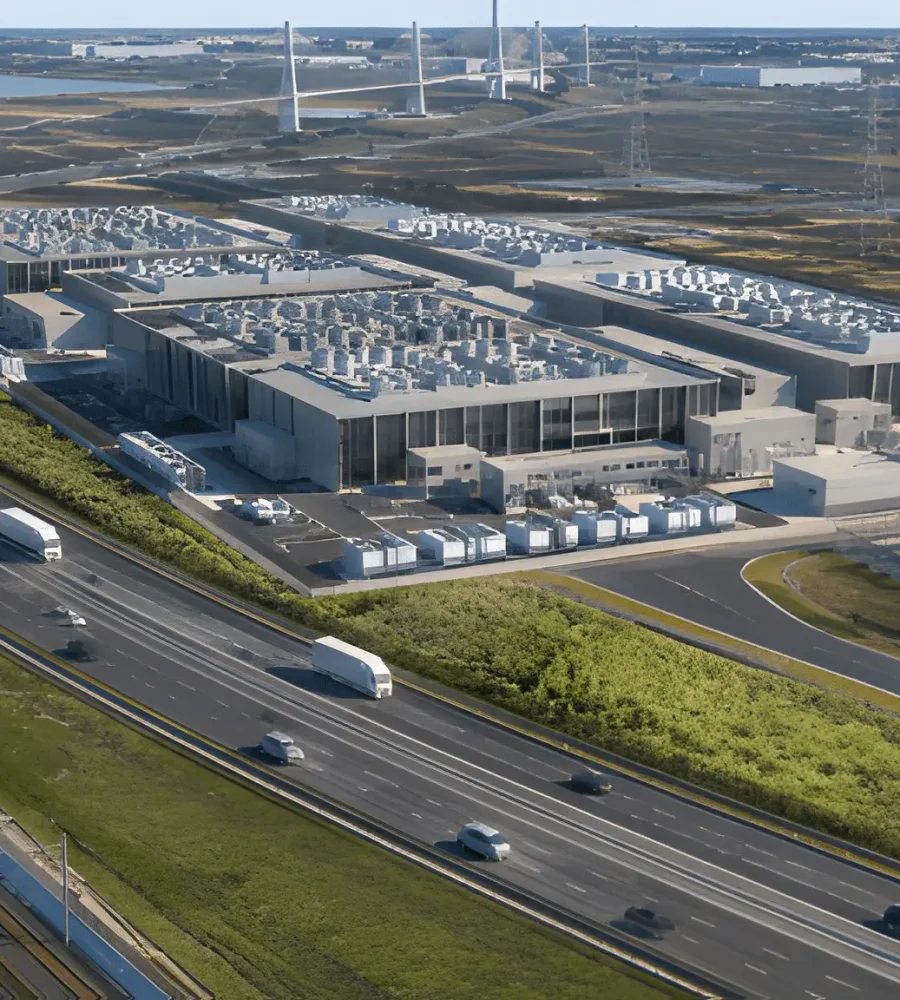
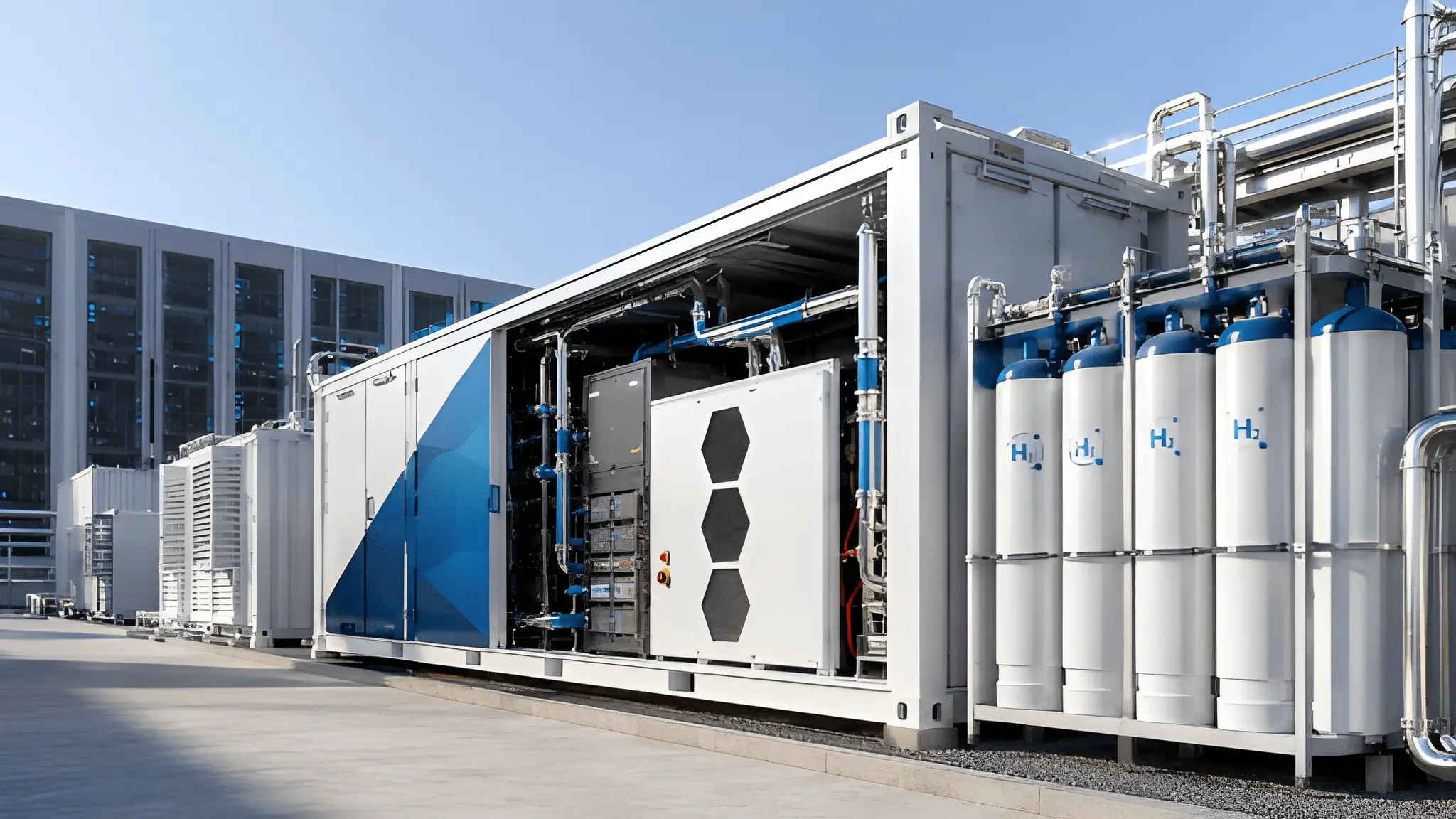
The first phase of the partnership will begin at ECL’s 35 MW CSC-1 campus in Santa Clara, California. Containerized PowerCell PS190 fuel cell systems will become part of the site’s FlexGrid microgrid, operating alongside utility electricity, battery storage and natural gas generation. The deployment builds upon ECL’s existing hydrogen-powered operations at its MV-1 facility in Mountain View, California, where the company says hydrogen has served as the primary power source for more than two years. That operational history provided the performance data needed before committing to a significantly larger rollout.
Rather than launching another demonstration project, ECL is expanding infrastructure it has already operated under production conditions. The company believes this experience reduces deployment risk while allowing future campuses to adopt a proven power architecture. Growing demand from AI customers in electricity-constrained markets has accelerated interest in alternative generation strategies that can supplement limited grid availability. Consequently, hydrogen is emerging as one of several technologies being evaluated for continuous computing environments.
“We evaluated multiple fuel cell technologies under real operating conditions over two years at our MV-1 facility before selecting PowerCell and Bosch,” said Yuval Bachar, founder and CEO of ECL. “This is not a pilot or a proof of concept. We are deploying these PowerCell PS190 units with the operational data to back it up, and we are signing an MOU for an additional 300 MW because the demand from AI operators for power in constrained markets far exceeds what any single grid connection can deliver.”
Partnership Extends Beyond Immediate Equipment Orders
The announcement consists of two complementary agreements that together establish both near-term deployment and long-term expansion. ECL has placed a firm purchase order for PowerCell PS190 fuel cell systems while also signing a separate non-binding memorandum of understanding covering approximately 300 MW of additional hydrogen fuel cell capacity. As ECL expands its FlexGrid data center footprint, the memorandum provides a framework for future deployments across multiple facilities. The structure allows both companies to move ahead with commercial implementation while planning for significantly larger capacity growth.
PowerCell enters the partnership with more than 25 years of fuel cell development experience and over one million hours of operational field data. Originally spun out of the Volvo Group, the company has deployed its technology across automotive, marine and stationary power applications before extending its focus toward digital infrastructure. That operational record gives ECL access to equipment that has already accumulated extensive runtime across demanding industrial environments. For AI operators seeking predictable infrastructure, long-term performance data has become an increasingly valuable differentiator. “ECL is among the very few operators who not only run hydrogen in production but understand how to orchestrate it intelligently alongside storage and other energy sources as one integrated system,” said Richard Berkling, CEO of PowerCell Group. “Our firm order for PowerCell PS190 systems, alongside our broader non-binding MOU, sends a clear signal that hydrogen-powered AI data centers are moving from first-of-kind toward industrial scale.”
Intelligent Energy Management Supports FlexGrid Strategy
Beyond generation hardware, the companies will integrate software platforms designed to coordinate multiple energy sources in real time. PowerCell’s Distributed Master Controller will connect with ECL’s Lightning management platform to orchestrate electricity flows across hydrogen fuel cells, batteries, utility power and natural gas generation. The system will dynamically balance loads across available resources while responding to changing computational demand within each FlexGrid deployment. Intelligent energy coordination becomes increasingly important as AI facilities rely on diverse power sources instead of single-grid connections.
This software layer reflects the broader evolution of AI infrastructure from standalone facilities toward integrated energy ecosystems. Operators must increasingly optimize cost, reliability and availability across multiple generation technologies while maintaining uninterrupted computing performance. Rather than treating alternative power sources as isolated assets, platforms like FlexGrid seek to manage them as unified infrastructure capable of adapting to fluctuating workloads. That model could become increasingly relevant as hyperscale AI deployments continue expanding into regions where grid capacity alone cannot support future compute growth.