 Skip to content
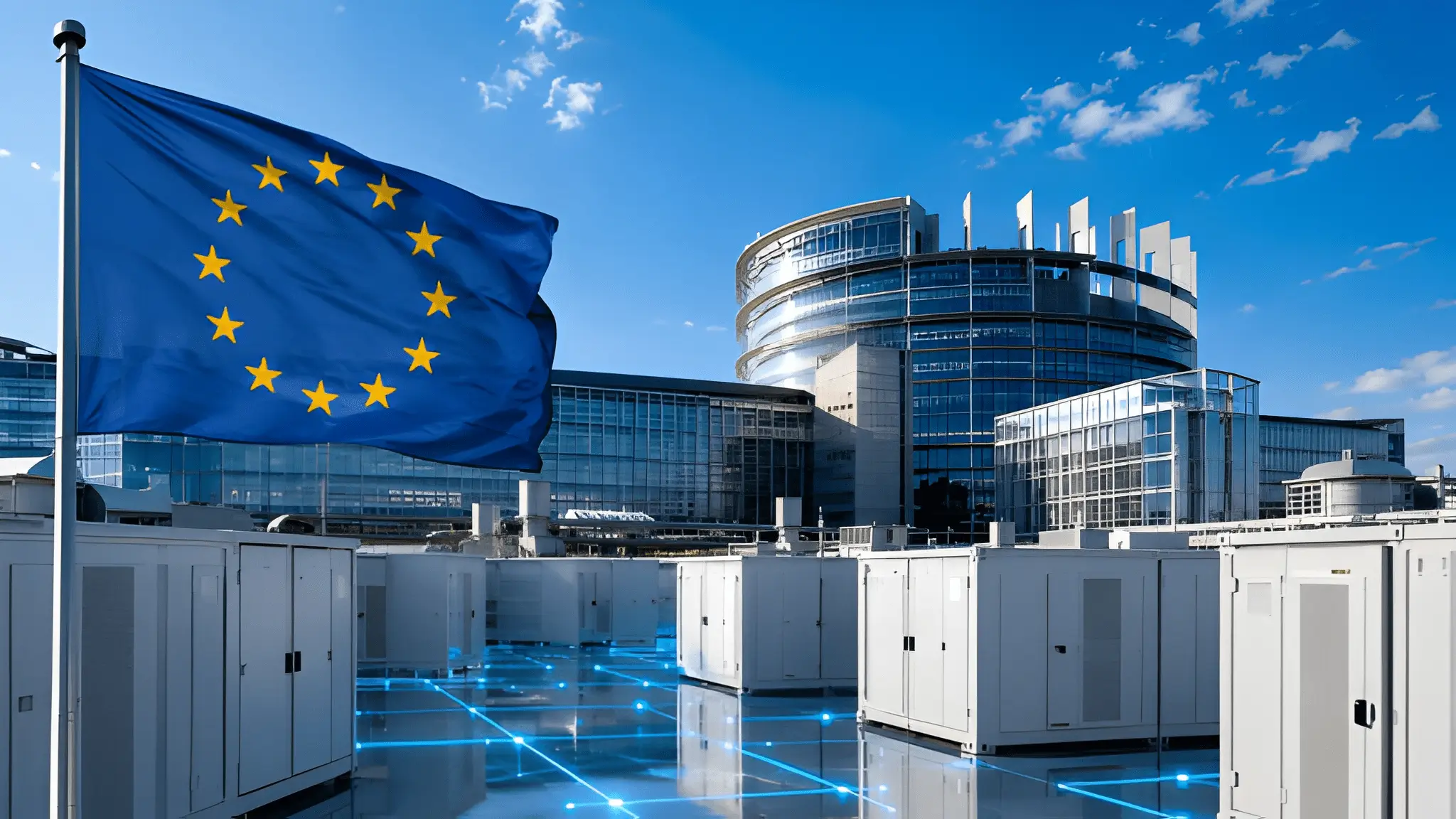
Europe is preparing to introduce one of its strongest regulatory interventions for digital infrastructure as artificial intelligence accelerates electricity demand across the continent. The European Commission is drafting a sustainability labeling framework that would rate both existing and new data centers on their environmental performance. Rather than focusing solely on energy consumption, the proposal broadens the conversation to include water use, renewable energy adoption, and waste heat recovery. The move signals that future data center competitiveness in Europe may depend as much on operational efficiency as computing capacity.

Brussels Wants Sustainability Ratings Across Europe’s Data Center Fleet
The European Union intends to introduce mandatory sustainability labels for data centers as policymakers confront the growing environmental cost of AI-driven infrastructure. The European Commission, the bloc’s executive body, plans to present the regulation later this month, requiring electronic sustainability labels for both newly built and operational facilities. The draft proposal, reviewed by Bloomberg News, aims to encourage operators to improve facility design while reducing the resources required to run increasingly power-intensive computing environments. The framework also seeks to establish common benchmarks that make efficiency performance more transparent across the European market.
The proposed ratings extend well beyond electricity consumption. They encourage operators to lower water usage, increase reliance on clean energy sources, and capture waste heat for nearby buildings or district heating systems instead of allowing it to dissipate unused. These measures reflect Europe’s broader climate objectives while addressing the operational realities created by the rapid expansion of AI infrastructure. As a result, sustainability metrics could become a more visible factor in infrastructure investment decisions across the region.
AI Growth Is Transforming Europe’s Electricity Demand
Europe’s ambition to strengthen its artificial intelligence ecosystem has introduced a new challenge for policymakers responsible for energy security. Governments want to expand AI capacity and remain competitive with the United States and China, yet that expansion requires unprecedented volumes of electricity. According to projections from the European Commission, electricity demand from data centers will more than double compared with 2023 levels and account for more than 3% of the European Union’s total power consumption before the decade ends. Those figures place digital infrastructure among the fastest-growing electricity consumers in Europe.
Modern AI workloads differ significantly from traditional enterprise computing. Training and inference platforms rely on advanced semiconductors that consume substantially more power and typically operate under sustained high utilization. This combination increases continuous electricity demand while placing additional pressure on already constrained transmission and distribution networks. Consequently, infrastructure efficiency has become a strategic concern rather than simply an operational objective.
AI Facilities Demand Far More Power Than Traditional Data Centers
The scale of energy consumption inside AI facilities continues to widen the gap between conventional and AI-focused infrastructure. A May 2026 report published by German think tank interface found that each server deployed inside an AI data center consumes three to ten times more electricity than servers operating in conventional facilities. That disparity reflects the computational intensity required by modern AI applications, particularly those powered by large-scale accelerators.

The report also emphasized that AI campuses increasingly resemble heavy industrial operations from a grid planning perspective. “In operational terms, a 100–300 megawatt AI cluster behaves less like the traditional IT infrastructure and more like an electro-intensive industrial plant connected to constrained grids,” the report said. That assessment reinforces why European regulators are beginning to evaluate data centers through the lens of industrial infrastructure instead of viewing them exclusively as digital assets.
Efficiency Standards Could Influence Future AI Infrastructure Investment
The sustainability labeling proposal arrives shortly after the European Commission introduced a broader strategy aimed at preparing Europe’s electricity networks for accelerating AI deployment. That initiative outlined plans to modernize power grids while using AI and digital technologies to improve grid efficiency and system resilience. The latest labeling framework complements that strategy by targeting infrastructure performance at the facility level rather than only the electricity network itself.
If adopted, the regulation would establish a standardized way to measure environmental performance across Europe’s rapidly expanding data center sector. Investors, developers, enterprise customers, and policymakers would gain clearer visibility into how efficiently facilities consume electricity, water, and renewable energy while managing excess heat. The proposal also reflects a wider shift in Europe’s digital infrastructure strategy, where operational sustainability increasingly sits alongside computing capacity as a defining measure of long-term competitiveness. For Europe’s data center industry, the regulation represents more than another compliance requirement. It suggests the next phase of AI infrastructure growth will reward operators capable of delivering higher computing performance with lower environmental impact, creating a new benchmark for expansion across one of the world’s fastest-growing digital infrastructure markets.












