
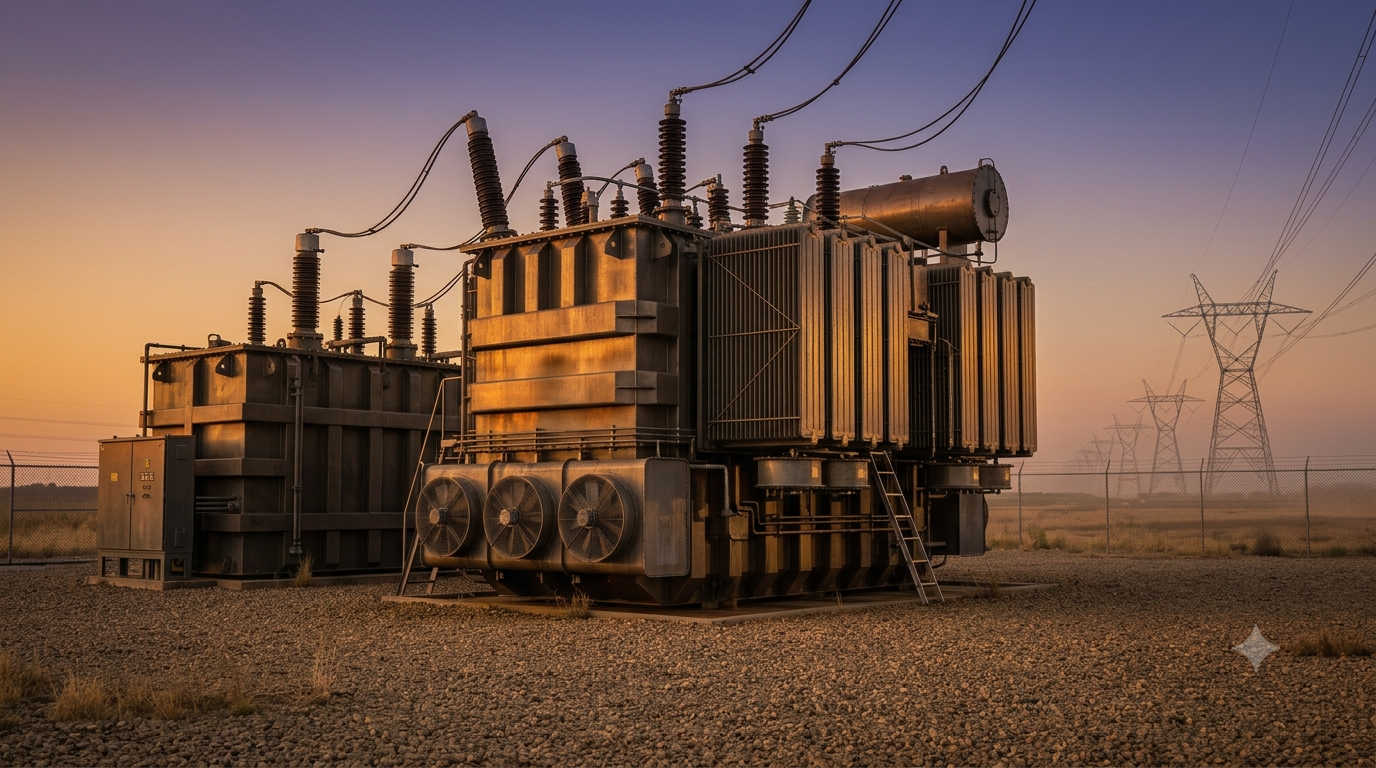
For three years, the AI industry treated chip allocation as the only scoreboard worth watching. Executives bragged about their place in Nvidia’s queue. They compared notes like oil barons once compared pipeline access. That logic worked when compute was the real constraint. However, it no longer holds. The named bottleneck for many planned data centers is no longer chips or GPU allocation. Instead, it is transformers, switchgear, and batteries, with order books stretching well past a typical build cycle. The gap between capital and physical infrastructure has become the defining story of this buildout. Hyperscaler capital remains committed well above six hundred billion dollars. Yet the physical layer needed to absorb that spending moves on a multi-year electrical clock. Therefore, money was never truly the binding constraint here. Similarly, permits stopped being the main obstacle once communities grew comfortable with new campuses nearby. Instead, the real constraint sits inside a transformer factory most executives have never visited. It waits behind orders placed years before anyone broke ground.

Why Chips Stopped Being the Bottleneck
The AI industry built its mental model on a software-era assumption. Scarcity, in that world, dissolves quickly once enough capital arrives. This assumption held for GPUs, since fabrication capacity expanded steadily over time. Consequently, allocation queues shortened across successive product cycles. But this logic breaks down for high-voltage equipment. The limiting input here is electrical steel, not silicon. Moreover, the limiting process is a regulated manufacturing line. No amount of funding can simply double that line overnight. As a result, the industry kept applying a chip-shortage playbook to a problem that behaves nothing like one. This mismatch, more than any single shortage, explains why so many announced gigawatts remain unbuilt.
From Chip Queues to Grid Queues
Power-led site selection has quietly replaced land-led site selection. A parcel with great zoning and fiber access now matters less than one core question. When does the substation actually energize? In the past, that question arrived late in development. It often surfaced after architectural design and tenant negotiation were already complete. Now, it arrives first, often before a site is even shortlisted. The electrical equipment timeline has effectively become the true gating factor. Developers who treat transformer procurement as an early feasibility input are moving years ahead. Meanwhile, those still treating it as a minor line item keep falling behind.
Why Transformers Cannot Be Rushed
A transformer differs fundamentally from a chip in manufacturing logic. Chip fabrication can scale across multiple facilities and geographies fairly quickly. Transformers, however, are custom-engineered, heavily tested, single-purpose assets. Each unit follows specifications tied to a specific utility and grid code. Additionally, the core materials behind them sit inside separate, constrained supply chains. Electrical steel and copper windings face pressures unrelated to semiconductor fabrication entirely. Demand for the largest equipment categories has surged dramatically in recent years. Meanwhile, the manufacturing base spent two decades underinvesting in new capacity. This imbalance cannot resolve itself on any software-style timeline. No matter how much capital tech companies redirect toward it, physics sets the pace.

Steel, Copper, and the Limits of Capital
What makes this constraint so stubborn is timing collision. Three demand waves are converging on the same factories simultaneously. AI infrastructure, industrial electrification, and routine grid replacement all compete together. None of these waves shares a common peak or pause. Therefore, none will politely step aside for the others. A hyperscaler can outbid a utility for an existing production slot. But that bidding war does not create a new slot. Capital can win access to scarce capacity, but it cannot manufacture more of it. This is the upstream illusion at its core. Many assumed money buys time, when the real constraint was throughput.
Software Thinking Meets Hardware Reality
The tech industry’s first instinct is always to engineer around a bottleneck. That instinct has produced some genuinely useful workarounds in recent years. AI-driven tracking tools, for instance, flag conflicting lead-time estimates across documents. These tools help developers spot risk earlier and avoid costly surprises later. However, none of this software actually manufactures a single transformer. It simply makes an existing queue more visible to everyone waiting. Visibility, while valuable, is still not the same as supply. Ultimately, better tracking cannot substitute for additional manufacturing capacity.
The Behind-the-Meter Workaround
The most consequential response has been the rise of onsite generation. Developers call this approach “bringing your own power” inside the industry. By generating electricity onsite, operators sidestep the need for huge transformers. Fuel cells and gas turbines have become preferred tools for this shift. In fact, one major hyperscaler committed to a multi-gigawatt onsite generation order recently. This approach, however, is not a permanent fix for everyone. Onsite generation still depends on its own equipment queues and permitting timelines. Even so, it signals something important about operator expectations going forward. Companies have clearly stopped expecting the grid to arrive on schedule.
Geography as a New Competitive Strategy
Domestic transformer capacity has failed to keep pace with rising demand. As a result, sourcing strategy has become a genuine competitive advantage. Canada, Mexico, and South Korea now supply most high-power transformers for AI data centers. Meanwhile, imports from China have expanded sharply in recent years. Operators who diversified supplier relationships early are seeing real construction progress today. Conversely, those relying on a single domestic manufacturer often face stalled projects instead. This mirrors a lesson chip companies learned during earlier supply shocks. Geographic concentration in any critical input quickly becomes a serious liability. The difference now is that heavy industry, not semiconductors, sets the pace. These remedies move at the speed of steel mills, not software updates.
A Circular Global Constraint
Interestingly, the countries supplying this equipment face the same pressures themselves. South Korea’s own tech giants confront similar transformer queues domestically. So even exporting nations remain exposed to the bottleneck they help ease elsewhere. This circularity is easy to overlook amid splashy capex headlines. Yet it reveals something deeper about the nature of this shortage. The constraint is genuinely global, not a uniquely American grid problem. No single country’s manufacturing base can absorb worldwide AI demand alone. Therefore, the global supply map will keep shifting in coming years. Still, that shift moves at the pace of factories, not funding rounds.
The Real Winners of This Race
The chip era taught the industry to measure leadership through allocation queues. Now, the power era measures it through supplier relationships secured early. Nearly half of this year’s planned gigawatt capacity has already slipped into delay. Meanwhile, the capital committed behind it remains larger than ever before. That widening gap is the only scoreboard worth watching now. Operators who locked in transformer orders years ago will train tomorrow’s frontier models. Likewise, those who diversified suppliers early are pulling ahead steadily. Everyone else is still checking a queue position, just for different hardware. The AI race was never going to be won on parameter counts alone. Instead, it is being won quietly inside substation planning meetings. Multi-year purchase agreements rarely make headlines, yet they decide outcomes. Teams who grasped this early are building real capacity today. Everyone else is still measuring progress with the wrong instrument entirely.











