 Skip to content
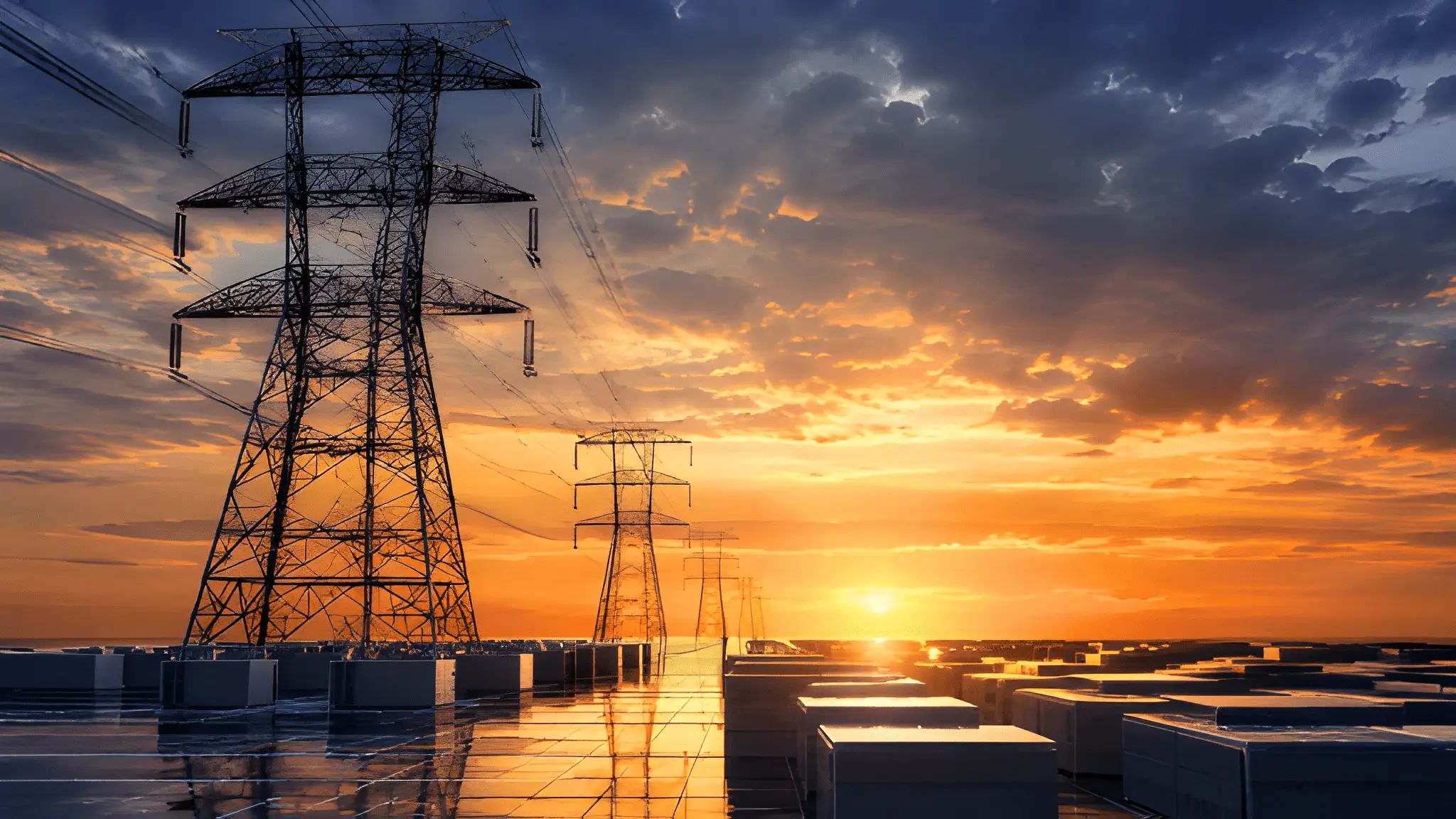
Artificial intelligence rarely appears where electricity cannot reach at industrial scale. That reality deserves far more attention than another announcement celebrating larger transmission projects. The discussion surrounding new ultra-high-voltage corridors often frames them as essential infrastructure for hyperscale computing. That conclusion is reasonable. Modern AI facilities require enormous volumes of reliable electricity, and stronger transmission networks make large-scale deployment possible. Yet the conversation usually ends there. It should begin there instead.

Power infrastructure is quietly evolving from a public utility into a competitive filter. Every new high-capacity transmission corridor influences not only where electrons travel but also where investment, innovation, and digital industries concentrate. The result could reshape AI competition more profoundly than the next generation of accelerators or language models. That possibility deserves closer scrutiny because electricity networks increasingly influence who participates in the AI economy, not simply who powers it.
Transmission Capacity Is Becoming An Economic Boundary
Technology discussions traditionally revolve around software, processors, talent, venture funding, and regulation. Physical infrastructure often remains in the background until shortages appear. AI changes that equation. Large training clusters, inference campuses, and cloud regions require dependable access to hundreds of megawatts, with predictable expansion paths measured in years rather than months. Fiber connectivity still matters. Land availability still matters. Skilled labor still matters. Those advantages become significantly harder to translate into large-scale AI deployments when sufficient electrical capacity is unavailable at the site.
Transmission planning therefore becomes a long-term industrial strategy instead of a utility engineering exercise. That subtle shift changes the geography of competition. Regions with strong transmission capacity become attractive destinations for hyperscale investment. Areas without similar electrical infrastructure may offer affordable land, research universities, capable engineering talent, and favorable business climates, yet remain overlooked because the grid cannot support rapid deployment. The limiting factor stops being imagination. It becomes electrical topology.
The AI Economy Risks Developing Grid Privilege
Digital transformation has long promised geographic flexibility. Cloud computing supposedly allowed companies to innovate regardless of physical location. AI introduces new constraints. Large-scale computing remains remarkably physical. Servers consume electricity. Cooling systems require energy. Network equipment demands constant power quality. Every expansion eventually meets the same question. Can the grid deliver? If the answer consistently favors a small collection of transmission-rich regions, digital competition gradually shifts toward geographic concentration. That dynamic could gradually create what might be described as “grid privilege,” where regions with stronger transmission infrastructure gain a lasting competitive advantage in attracting large AI investments.
Grid privilege does not emerge because one company outperforms another. It emerges because one location possesses infrastructure that another location cannot replicate quickly. Transmission projects often require years of permitting, financing, engineering, and construction before delivering additional capacity. Innovation cycles operate much faster. The mismatch means infrastructure decisions made today could influence competitive opportunities for the next decade. The conversation frequently emphasizes hyperscalers because they represent the largest energy consumers. Their investments attract headlines, construction activity, and public attention.

Bigger Wires Do Not Automatically Create Fair Competition
Expanding transmission infrastructure remains necessary. Modern grids require reinforcement to support electrification, industrial growth, and AI deployment. That objective deserves support. The assumption that every new transmission corridor automatically creates broader opportunities deserves greater skepticism. Large transmission projects often attract the biggest electricity users because they typically have the financial resources and long-term demand needed to support major infrastructure investments. Those incentives make economic sense. They do not necessarily maximize competitive diversity.
If transmission upgrades consistently prioritize regions already attracting major technology investment, existing advantages become stronger while underserved regions wait longer for meaningful improvements. In those circumstances, infrastructure investment could reinforce existing geographic concentrations of AI development rather than broaden access across more regions. That outcome would represent an unintended consequence rather than deliberate policy. Yet unintended consequences often shape technology markets more profoundly than strategic intentions.
Previous generations debated broadband availability because internet connectivity determined economic participation. The emerging AI economy introduces a different infrastructure question. Access to compute increasingly depends on access to electricity. That distinction matters because transmission networks cannot expand with the same speed as cloud software or digital platforms. New substations, transmission corridors, transformers, and interconnections demand extensive planning horizons. As AI demand accelerates, compute availability may increasingly reflect historical infrastructure investment instead of present-day entrepreneurial ambition.
The Real AI Race Runs Across The Grid
The technology sector often portrays AI competition as a contest between algorithms, semiconductor roadmaps, and investment capital. Physical infrastructure increasingly tells a different story. Transmission networks determine whether massive computing facilities can operate reliably. Reliable electricity determines whether digital infrastructure expands. Digital infrastructure influences where AI ecosystems mature. That sequence reverses the familiar narrative. Innovation no longer simply creates infrastructure demand.
Infrastructure increasingly determines where innovation can exist. Celebrating stronger transmission networks remains justified because modern economies cannot function without them. The larger question is whether those investments broaden participation or quietly narrow it. The next generation of AI leaders may not emerge solely from the regions producing the best researchers or attracting the most venture capital. They may emerge from the regions where the transmission lines arrived first. That possibility should concern policymakers as much as engineers, because once electrical geography begins defining digital opportunity, the AI economy risks becoming less open than the internet era ever promised.












