
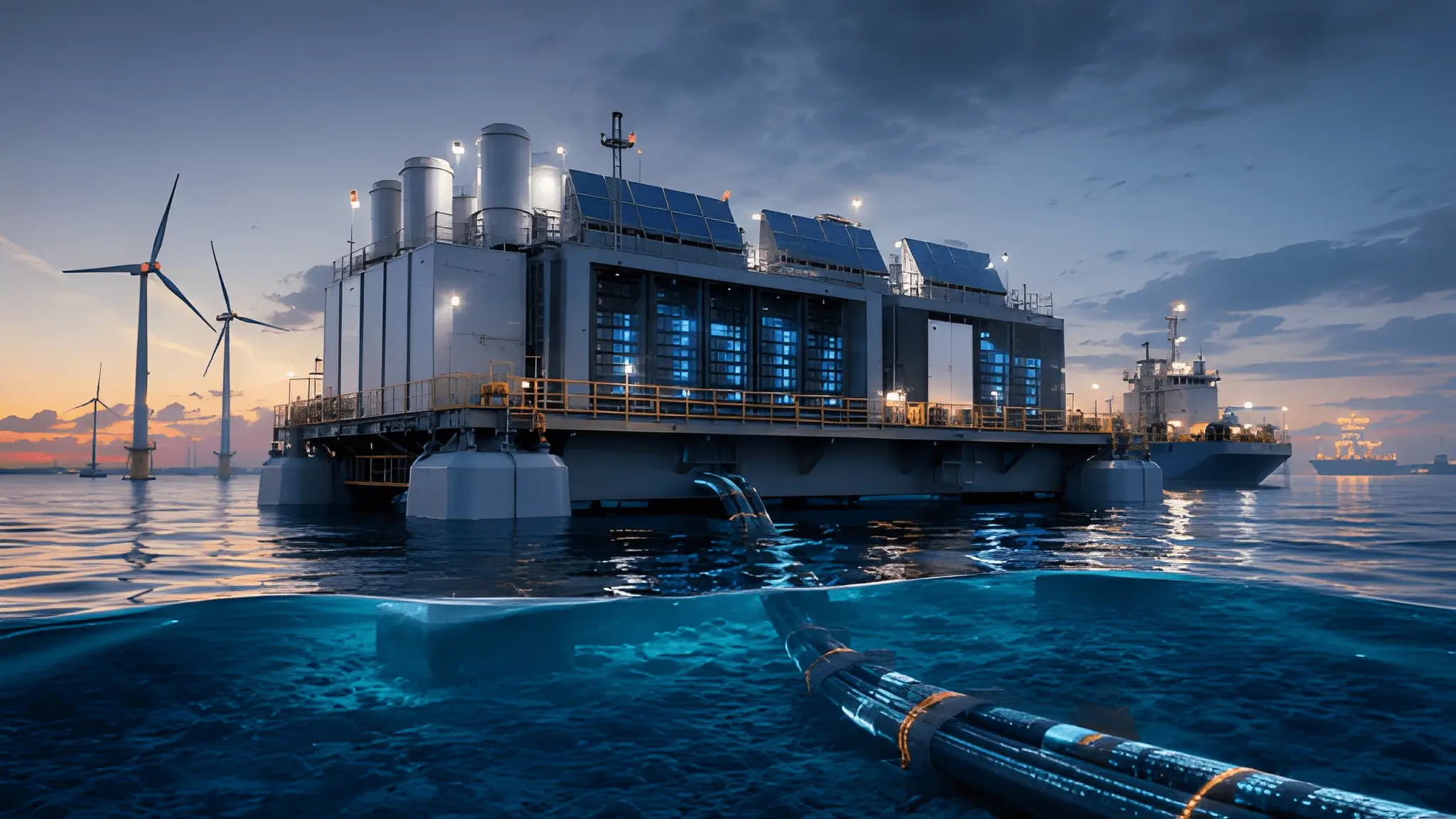
Every generation of digital infrastructure inherits a constraint that eventually becomes too expensive to accept as permanent. Earlier expansion cycles struggled with processor availability, long-haul connectivity, and land acquisition before engineering gradually solved those limitations through manufacturing scale, optical networking, and standardized construction methods. Power availability now occupies that same position because electricity has become the governing variable that determines whether advanced compute capacity reaches production or remains confined to planning documents. This shift has altered investment priorities from maximizing building efficiency toward securing dependable energy before architectural drawings even begin to take shape. Technical discussions increasingly revolve around infrastructure sovereignty because operational certainty now depends as much on energy strategy as on computing architecture itself.

Infrastructure Stops Waiting for Permission
Planning teams increasingly discover that the electrical connection once considered the final administrative milestone has become the first commercial risk capable of reshaping an entire deployment strategy. Local transmission constraints, permitting complexity, environmental reviews, and competing industrial demand have transformed interconnection into a lengthy process whose duration often exceeds equipment procurement and physical construction schedules. Developers therefore evaluate locations according to their ability to escape conventional dependency rather than merely optimize conventional utility access. The conversation has consequently expanded beyond traditional site selection because reliable electricity now represents an architectural design challenge instead of a procurement exercise alone. Digital infrastructure has entered an era where independence frequently creates greater strategic value than incremental operational efficiency.
An alternative model has therefore begun attracting greater technical attention because it approaches electrical supply as infrastructure that operators increasingly own, transport, finance, and optimize rather than simply purchase. Offshore deployment concepts, floating compute platforms, subsea transmission assets, localized generation technologies, and maritime permitting frameworks collectively illustrate this broader shift toward grid-optional infrastructure design. None of these approaches eliminate dependence on electricity itself because computation will always require enormous amounts of dependable energy to sustain modern workloads. Instead, they reduce dependence on specific institutions that historically controlled where electricity could be consumed and under which commercial conditions that consumption became possible. That distinction carries implications extending well beyond engineering because control over infrastructure timing increasingly determines competitive positioning across the broader compute ecosystem.
Permitting Starts Where the Coast Ends
The traditional development pathway for large computing infrastructure has long depended upon navigating overlapping layers of municipal approvals before construction activities could meaningfully begin. Land ownership, environmental review, public consultation, transportation planning, water management, and zoning compliance frequently progress as interconnected processes that influence one another throughout the project lifecycle. Each approval introduces dependencies whose cumulative effect often extends well beyond engineering complexity because administrative sequencing determines practical deployment timelines. These realities have encouraged infrastructure planners to examine jurisdictions where the regulatory sequence differs fundamentally from terrestrial development practices. Maritime deployment therefore enters discussion not because oceans eliminate regulation but because they replace one regulatory architecture with another that follows different operational priorities.

Offshore infrastructure does not escape legal oversight, although it redistributes authority across maritime agencies whose responsibilities focus on navigation, environmental stewardship, subsea resource management, and coastal operations rather than municipal land administration. Developers consequently engage with seabed leasing authorities, coastal regulators, maritime safety organizations, and national agencies responsible for offshore infrastructure instead of negotiating every stage through local planning departments. Project sequencing changes because technical compliance emphasizes marine coexistence, navigational safety, subsea installation integrity, and ecological monitoring rather than neighborhood land-use compatibility. This distinction significantly influences project management because regulatory milestones become aligned with marine engineering schedules instead of urban development calendars. Infrastructure timing therefore reflects operational capability across offshore logistics as much as legal authorization itself.
Maritime Jurisdiction Rewrites Development Sequencing
Moving infrastructure beyond the shoreline fundamentally changes which authorities exercise primary oversight during project development and operational planning. Coastal waters fall within legal frameworks that distinguish navigational safety, environmental obligations, commercial activity, resource management, and national sovereignty through maritime law rather than municipal planning codes. Developers therefore organize permitting strategies around seabed occupancy, cable routing, marine environmental assessments, offshore construction methodology, and operational navigation instead of conventional building permits governing terrestrial real estate. Every approval continues requiring extensive documentation because offshore engineering introduces unique technical responsibilities that demand equally rigorous regulatory evaluation.
Administrative complexity remains substantial, yet the sequence follows marine infrastructure logic instead of urban expansion priorities. Marine engineering documentation often progresses in parallel with permitting reviews because installation methods, environmental safeguards, and navigation planning evolve as integrated technical packages rather than isolated planning submissions. Regulatory authorities consequently evaluate infrastructure according to marine coexistence principles that balance commercial development with ecological protection and navigational continuity. Such sequencing allows project management teams to align engineering milestones more closely with regulatory engagement instead of repeatedly revising development plans following changing local land-use considerations. Infrastructure certainty therefore emerges through technical coordination rather than prolonged negotiations over municipal growth objectives. Offshore development does not remove oversight because it redistributes oversight toward agencies whose priorities align directly with operational marine systems.
Seabed Rights Become Strategic Infrastructure Assets
Ownership beneath the water rarely resembles traditional real estate because governments generally retain authority over seabed allocation through structured leasing mechanisms that define both operational responsibilities and commercial rights. Long-term seabed agreements increasingly function as infrastructure instruments because they determine where generation assets, floating platforms, transmission cables, and supporting marine systems may remain throughout operational lifecycles. These agreements influence financing decisions because lenders evaluate legal certainty surrounding occupancy with the same attention traditionally given to terrestrial property ownership. Engineering teams therefore integrate lease conditions directly into infrastructure design so operational flexibility remains consistent with regulatory obligations over many years. Commercial strategy increasingly begins with marine access rights instead of land acquisition whenever offshore deployment forms part of broader power independence objectives.
Seabed allocations additionally influence future expansion because neighboring cable corridors, navigation routes, conservation areas, and offshore industrial developments collectively determine how infrastructure ecosystems evolve over time. Developers consequently evaluate marine geography through infrastructure connectivity rather than simple spatial availability because every future interconnection depends upon preserving practical routing options beneath surrounding waters. Long-duration leases therefore become strategic assets extending beyond physical occupancy into long-term operational resilience and infrastructure scalability. Financial institutions increasingly recognize these legal arrangements as foundational project components because infrastructure value depends upon secure operational continuity across the entire deployment horizon. Offshore energy strategy ultimately begins with controlled access to marine space before generation technology or compute architecture enters detailed engineering discussions.
Your Facility Can Outbid the Local Grid for Electrons
The commercial relationship between large computing infrastructure and electricity has historically remained straightforward because operators purchased energy while utilities generated, transmitted, and delivered it under regulated commercial arrangements. That structure positioned compute campuses as increasingly sophisticated consumers whose primary objective centered on securing dependable supply at predictable cost without participating directly in electricity production. Rising computational density, evolving generation technologies, and changing wholesale market structures have gradually expanded the range of viable operating models available to infrastructure developers. Energy strategy now reaches far beyond procurement because ownership of generation assets increasingly influences deployment flexibility, operational resilience, and long-term commercial positioning. Grid-optional architecture therefore introduces a structural change in how eligible infrastructure may participate within electricity markets under applicable regulatory frameworks, rather than simply altering where electricity originates.
Distributed generation technologies have matured to the point where infrastructure operators can evaluate localized power production as an integrated component of facility design rather than as emergency backup alone. Natural gas reciprocating engines, fuel cells, microturbines, modular hydrogen systems, and hybrid energy architectures allow operators to match electrical production more closely with computing demand while maintaining operational independence from traditional transmission bottlenecks. These systems continue requiring fuel logistics, emissions compliance, maintenance planning, and technical oversight because localized generation transfers operational responsibility alongside greater control. Infrastructure planning therefore increasingly balances engineering complexity against deployment certainty instead of treating utility dependence as the only practical operating model. The resulting conversation centers on infrastructure autonomy rather than merely reducing electricity procurement costs.
Generation Assets Become Strategic Market Participants
Localized generation fundamentally changes how infrastructure interacts with electrical markets because operators no longer occupy the position of passive consumers throughout every operating condition. Generation systems capable of responding to changing demand profiles may optimize internal power flows and, where permitted under applicable electricity market rules, support broader grid stability through approved participation mechanisms. Technical architecture therefore extends beyond ensuring uninterrupted compute operations because generation scheduling, dispatch capability, fuel availability, maintenance planning, and market participation become interconnected engineering considerations. Infrastructure designers increasingly examine electrical generation with the same systems-thinking traditionally applied to networking, cooling, and storage because every subsystem contributes toward operational flexibility. Reliable compute capacity consequently depends upon coordinated energy architecture rather than isolated facility engineering.
Electricity generation also introduces operational data streams that influence forecasting, asset utilization, maintenance scheduling, and commercial decision-making across infrastructure portfolios. Engineering teams therefore integrate energy management platforms capable of balancing computing demand with localized production while preserving compliance with market participation requirements established by regional system operators. Operational intelligence becomes increasingly valuable because infrastructure must continuously evaluate whether internally generated electricity should satisfy on-site demand or support external market transactions where regulations permit. Strategic flexibility consequently emerges through software coordination as much as mechanical generation capability. Grid-optional infrastructure therefore represents an integrated operational ecosystem instead of merely installing generators beside computing equipment.
Electricity Becomes a Bidirectional Commercial Asset
Electricity traditionally entered data infrastructure through contractual delivery arrangements that rarely allowed operators to influence broader market dynamics beyond negotiating supply agreements. Grid-optional strategies increasingly reposition electricity as a managed asset whose value changes according to operational demand, wholesale pricing, fuel availability, maintenance schedules, and generation capability across interconnected systems. Commercial planning therefore expands beyond securing dependable supply because infrastructure owners may evaluate opportunities to optimize both consumption and on-site generation within the regulatory frameworks governing the electricity markets in which they operate. Engineering choices surrounding generation capacity, storage integration, dispatch responsiveness, and fuel diversity directly influence commercial flexibility over many years of operation. Infrastructure economics consequently become inseparable from energy market participation whenever localized generation forms part of long-term deployment strategy.
Bidirectional electricity management also strengthens resilience because localized production reduces exposure to transmission constraints that occasionally affect regional electricity availability during periods of exceptional demand or infrastructure disruption. Operators retain responsibility for maintaining safe and reliable generation throughout every operating condition, yet they gain substantially greater influence over how electrical resources support business continuity across changing market environments. Infrastructure planning therefore shifts toward maximizing controllable energy resources instead of relying exclusively upon externally scheduled supply arrangements. Strategic independence emerges not through complete separation from public electricity networks but through expanding the range of operational choices available where regulatory frameworks support diversified energy sourcing and on-site generation. Generation ownership ultimately transforms electrical infrastructure from a fixed dependency into a dynamic operational capability whose value extends beyond uninterrupted computing performance.
Subsea Cables Become Your Private Transmission Line
Electricity infrastructure has traditionally relied upon shared transmission networks that distribute power across regions before individual consumers connect through local distribution systems. That model has served industrial development for decades because centralized generation and public transmission created economies of scale that individual operators could not reasonably replicate. Grid-optional infrastructure introduces a different perspective because operators increasingly evaluate dedicated electrical pathways alongside dedicated networking assets as complementary elements of infrastructure planning. Private subsea cable systems therefore emerge as strategic infrastructure components that support both electrical delivery and operational independence where offshore deployment models become technically and commercially viable. This evolution reflects changing infrastructure priorities rather than a replacement of existing transmission systems across every deployment scenario. Subsea power transmission has matured through decades of offshore energy development, international electrical interconnectors, and marine engineering projects that demonstrate reliable long-distance electrical transport beneath coastal waters.
High-voltage alternating current and high-voltage direct current technologies already support numerous offshore applications because marine environments require transmission systems capable of operating under demanding physical conditions for extended service lives. Infrastructure developers therefore inherit a substantial engineering foundation rather than introducing an entirely experimental approach to offshore electrical connectivity. Modern cable systems continue demanding specialized installation vessels, seabed surveys, environmental assessments, and long-term maintenance planning because underwater infrastructure remains technically sophisticated throughout its operational lifecycle. Operational confidence consequently depends upon disciplined engineering execution rather than conceptual novelty. Private electrical transmission also changes the strategic relationship between compute infrastructure and geography because energy no longer needs to enter exclusively through existing terrestrial transmission corridors. Operators gain greater flexibility when electrical pathways become infrastructure assets that can be designed alongside compute platforms instead of inherited from surrounding utility networks.
Energy Corridors and Fiber Corridors Begin to Converge
Digital infrastructure has historically viewed subsea cables primarily through the lens of telecommunications because international connectivity depends upon extensive marine fiber networks linking continents and coastal landing stations. Electrical infrastructure increasingly follows similar geographical logic because offshore generation, floating platforms, and coastal energy systems require dependable transmission corridors that share many engineering considerations with established telecommunications routes. Infrastructure planners therefore begin evaluating marine corridors as integrated utility pathways capable of supporting both electrical transport and digital connectivity where technical conditions permit. Coordinated planning creates opportunities to align energy delivery with networking architecture rather than treating each infrastructure layer as an independent deployment exercise. Marine geography consequently evolves into a multidimensional infrastructure asset instead of serving purely as an obstacle separating terrestrial networks.
Cable routing decisions increasingly account for seabed characteristics, shipping activity, environmental sensitivity, maintenance accessibility, and future infrastructure expansion because each factor influences operational resilience over decades of service. Engineering teams coordinate these considerations during early project development so transmission assets remain compatible with evolving compute requirements while preserving practical maintenance access throughout operational lifecycles. Integrated infrastructure planning consequently reduces the likelihood of future conflicts between electrical expansion and digital connectivity objectives across constrained coastal environments. Strategic corridor management therefore becomes as important as cable technology itself whenever long-term infrastructure independence forms part of deployment strategy. Dedicated subsea infrastructure transforms marine routes into actively managed operational assets supporting both energy reliability and digital continuity.
Transmission Ownership Changes Infrastructure Economics
Ownership of transmission infrastructure fundamentally alters how operators evaluate operational risk because dependence shifts from shared public assets toward privately managed engineering systems designed around specific deployment objectives. Public transmission networks continue providing broad societal value through interconnected electricity systems, yet private transmission enables infrastructure owners to optimize electrical pathways according to their own operational priorities where regulatory frameworks permit such arrangements. Capital investment therefore extends beyond compute equipment and generation technology into transmission assets that directly influence long-term operational flexibility and infrastructure resilience. Engineering decisions surrounding cable redundancy, route diversity, insulation systems, monitoring technologies, and maintenance strategies collectively determine transmission performance throughout decades of continuous operation. Infrastructure economics consequently expand beyond electricity procurement into comprehensive lifecycle management of privately controlled electrical assets.
Continuous monitoring technologies strengthen this operational model because modern subsea transmission systems increasingly incorporate advanced sensing capabilities that detect thermal behavior, insulation performance, mechanical stress, and environmental conditions before developing issues affect electrical reliability. Infrastructure operators therefore gain deeper visibility into transmission performance while integrating cable health directly within broader operational management platforms governing compute environments. Predictive maintenance becomes increasingly practical because engineering teams receive operational intelligence that supports proactive intervention instead of reactive repair following infrastructure failure. Transmission ownership therefore creates additional operational responsibilities while simultaneously providing greater control over infrastructure reliability across changing market and environmental conditions. Dedicated subsea transmission ultimately represents an extension of infrastructure sovereignty rather than simply another category of electrical equipment.
Flag-State Power: Shopping Jurisdictions for Energy Rules
Maritime infrastructure introduces a legal environment that differs fundamentally from conventional land-based development because floating assets operate within a framework shaped by flag-state registration, coastal state jurisdiction, international maritime conventions, and national energy regulations. The country under whose flag a vessel or floating installation is registered assumes defined legal responsibilities that influence operational compliance across multiple domains, even when the installation remains near another nation’s coastline. Infrastructure developers therefore evaluate legal jurisdiction alongside engineering capability because regulatory certainty increasingly affects long-term operational planning. Energy sourcing, emissions reporting, customs obligations, equipment certification, and operational oversight all become interconnected through maritime legal structures that extend beyond local terrestrial regulation. Jurisdiction has always influenced infrastructure investment, yet floating compute platforms expand the range of available legal environments because registration choices may affect how certain maritime obligations apply within internationally recognized legal frameworks.
Legal planning instead becomes more sophisticated because operators balance multiple overlapping jurisdictions whose responsibilities differ according to location, operational purpose, and infrastructure design. Strategic deployment increasingly depends upon understanding regulatory interaction rather than assuming a single governing authority controls every operational decision. Energy infrastructure becomes particularly sensitive to jurisdiction because fuel sourcing, emissions compliance, electrical export arrangements, environmental obligations, and marine safety standards all depend upon established legal responsibilities that vary across regulatory systems. Infrastructure planners therefore integrate legal specialists into project development much earlier than conventional terrestrial projects typically require because regulatory choices influence engineering decisions from the outset. Equipment selection, operational procedures, documentation requirements, and commercial contracts all reflect the jurisdictional framework established before deployment begins. Technical flexibility consequently depends upon legal clarity because infrastructure cannot operate independently of the regulatory systems governing its physical presence and commercial activity.
Maritime Registration Shapes Operational Compliance
Flag-state registration extends well beyond displaying a national flag because it establishes the legal identity through which floating infrastructure satisfies internationally recognized maritime obligations across safety, certification, inspection, and operational governance. Classification societies, maritime administrations, and technical regulators collectively verify that registered assets comply with applicable engineering and operational standards throughout their service lives. Infrastructure developers therefore evaluate registration frameworks according to technical oversight, administrative efficiency, international recognition, and compatibility with long-term operational objectives. Engineering documentation, maintenance procedures, inspection schedules, crew responsibilities, and equipment certification all become integrated within the compliance structure associated with the selected maritime registry. Operational reliability consequently depends upon sustained regulatory engagement rather than a one-time registration process completed before deployment.
Different maritime registries may emphasize administrative practices, technical implementation, and compliance procedures in ways that influence project execution without altering internationally accepted safety obligations established through maritime conventions. Infrastructure planners therefore examine registry capabilities alongside engineering requirements because responsive regulatory administration can simplify long-term asset management across complex offshore operations. Legal certainty supports technical continuity whenever maintenance, equipment replacement, operational modification, or future expansion requires ongoing engagement with maritime authorities throughout an asset’s operational lifespan. Registry selection therefore represents a strategic governance decision instead of merely satisfying administrative formalities before construction concludes. Flag-state administration ultimately becomes part of the infrastructure operating model because regulatory oversight continues throughout the complete lifecycle of offshore compute assets.
Regulatory Geography Becomes an Infrastructure Variable
Traditional site selection has long emphasized land availability, transportation access, workforce considerations, and utility connectivity because those variables largely determined infrastructure feasibility across terrestrial development. Floating infrastructure introduces regulatory geography as an equally significant design parameter because legal jurisdiction directly affects operational obligations surrounding energy systems, environmental management, customs procedures, technical inspections, and international movement of specialized equipment. Infrastructure planning therefore expands beyond physical geography into legal geography where regulatory frameworks become measurable deployment variables rather than background administrative considerations. Commercial strategy increasingly reflects jurisdictional compatibility alongside engineering feasibility because long-term operational efficiency depends upon both dimensions functioning together. Legal architecture consequently joins electrical architecture as a foundational component of infrastructure planning.
This broader perspective encourages multidisciplinary planning teams that combine marine engineering, electrical engineering, environmental expertise, maritime law, and commercial strategy throughout early project development rather than sequentially introducing legal review after technical design reaches maturity. Integrated planning reduces the likelihood of expensive redesign because regulatory requirements become embedded within engineering decisions before procurement, fabrication, and offshore installation commence. Infrastructure resilience therefore develops through coordinated governance structures that support technical performance across changing regulatory and operational environments over many years of service. Jurisdiction becomes an operational resource that requires deliberate management instead of representing an external constraint imposed after engineering decisions have already been finalized. Grid-optional infrastructure ultimately succeeds through alignment between legal certainty and engineering execution rather than through technological innovation alone.
The Mooring Contract That Replaces Your Utility Agreement
Utility agreements have traditionally defined the commercial relationship between large computing infrastructure and the external electricity network because they established service obligations, connection responsibilities, reliability expectations, and long-term operating conditions. Grid-optional infrastructure redistributes many of those responsibilities by placing greater emphasis on marine occupancy rights rather than conventional electrical service contracts. Floating platforms cannot operate without legally secured access to protected waters, stable mooring systems, navigational clearance, and supporting maritime logistics that collectively determine operational continuity. Infrastructure planning therefore shifts toward agreements governing physical maritime presence because uninterrupted occupancy becomes the prerequisite for dependable energy production and compute availability. The contractual foundation supporting offshore infrastructure consequently evolves from purchasing electricity toward securing long-term operational access within carefully regulated marine environments.
Mooring arrangements extend well beyond anchoring equipment in place because they establish the engineering, legal, and operational framework through which floating infrastructure remains connected to generation assets, transmission systems, maintenance logistics, and coastal support services. Every component within that framework requires coordinated planning because environmental loading, vessel movement, subsea infrastructure, inspection access, and emergency response procedures all influence long-term operational reliability. Developers therefore negotiate agreements that reflect engineering realities instead of relying solely upon standardized utility service terms designed for terrestrial infrastructure. Operational certainty increasingly depends upon maintaining continuous marine access throughout changing environmental conditions rather than preserving a single electrical connection supplied from an adjacent substation. Grid-optional infrastructure thus replaces one category of operational dependency with another that aligns more closely with offshore engineering principles.
Marine Occupancy Defines Operational Continuity
Permanent computing infrastructure has traditionally assumed that land ownership naturally guarantees uninterrupted physical access throughout normal operating conditions. Offshore infrastructure cannot rely upon that assumption because every operational activity depends upon legally protected occupancy rights supported by engineered mooring systems capable of maintaining positional stability under varying environmental conditions. Engineers therefore design mooring architecture alongside electrical systems, cooling infrastructure, structural integrity, and maintenance logistics because positional reliability directly influences every other operational subsystem. Marine engineering standards define acceptable loading conditions, inspection intervals, redundancy requirements, and long-term material performance so infrastructure remains operational throughout changing seasonal environments. Operational continuity consequently begins with physical stability rather than electrical connectivity alone.
Long-term mooring performance also influences maintenance strategy because underwater components require periodic inspection using remotely operated vehicles, specialist diving teams, or autonomous monitoring technologies depending upon installation depth and environmental conditions. Infrastructure operators therefore integrate marine inspection planning into broader operational maintenance programs rather than treating mooring hardware as static infrastructure requiring minimal oversight after installation. Continuous condition assessment reduces operational uncertainty because early identification of fatigue, corrosion, seabed movement, or component degradation supports planned maintenance before reliability becomes affected. Engineering resilience consequently depends upon sustained lifecycle management across every physical interface connecting floating infrastructure with the surrounding marine environment. Secure occupancy ultimately represents an actively managed engineering capability rather than a contractual entitlement existing independently of operational practice.
Port Access Replaces Conventional Utility Relationships
Coastal support infrastructure assumes greater operational importance whenever compute capacity moves offshore because maintenance personnel, replacement equipment, fuel logistics, specialized vessels, and emergency response resources all depend upon dependable access to nearby port facilities. Port agreements therefore become critical operational contracts that influence infrastructure availability in offshore deployments, complementing rather than replacing the role traditionally served by utility service arrangements on land. Developers evaluate harbor accessibility, marine traffic management, weather resilience, heavy-lift capability, storage capacity, and operational support services before selecting long-term deployment locations. Infrastructure planning consequently expands beyond offshore engineering into coordinated coastal logistics that sustain uninterrupted operations throughout the entire service lifecycle. Strategic resilience increasingly reflects the strength of maritime support ecosystems rather than simply the proximity of electrical substations.
Port authorities also exercise operational oversight that influences maintenance scheduling, vessel movements, cargo handling procedures, navigational coordination, and emergency response planning across complex coastal environments supporting multiple commercial activities. Infrastructure operators therefore maintain continuous collaboration with maritime stakeholders because efficient operational coordination reduces unnecessary delays while preserving navigational safety and regulatory compliance. These relationships evolve into long-term operational partnerships centered upon dependable marine access rather than transactional service interactions associated with conventional electricity procurement. Coastal logistics become an integral component of infrastructure architecture because reliable offshore operations depend upon synchronized activity across both marine and shore-based systems. The mooring agreement ultimately functions as one element within a broader operational framework where maritime access replaces traditional utility relationships as the foundation of infrastructure continuity.
When Utilities Don’t Underwrite You, Marine Insurers Do
Traditional utility-connected infrastructure derives a portion of its operational assurance from the engineering standards, network reliability practices, and service obligations maintained across regulated electricity systems. Grid-optional infrastructure assumes greater direct responsibility because operators own or control substantially more of the physical systems supporting continuous electrical availability. Insurance providers therefore evaluate these projects through a broader engineering lens that extends beyond structural integrity into generation architecture, marine operations, subsea infrastructure, environmental exposure, and long-term maintenance capability. Risk assessment becomes an integrated technical review rather than a financial exercise conducted independently of engineering design. The ability to obtain favorable insurance terms increasingly reflects the quality of infrastructure planning before construction ever begins.
Marine insurance has long supported offshore energy, commercial shipping, and subsea infrastructure because those industries routinely operate in demanding environments where operational continuity depends upon disciplined engineering and rigorous maintenance. Floating compute platforms inherit many of those established evaluation principles rather than creating an entirely new insurance category from the ground up. Underwriters therefore review structural redundancy, mooring integrity, cable protection, fire safety systems, emergency response planning, inspection procedures, and maintenance strategies before determining coverage conditions. Engineering documentation consequently becomes a central component of financial risk evaluation because every technical decision influences operational reliability over many years of service. Insurance increasingly functions as an external engineering validation mechanism instead of merely transferring financial exposure.
Engineering Quality Directly Shapes Risk Profiles
Insurance evaluation for offshore infrastructure extends far beyond reviewing replacement values because underwriters assess whether engineering systems collectively support dependable long-term operation under realistic environmental conditions. Structural analysis, fatigue modeling, corrosion protection, subsea cable routing, electrical redundancy, generation reliability, fire suppression capability, and monitoring systems all contribute toward an integrated understanding of operational resilience. Infrastructure developers therefore document engineering assumptions with exceptional precision because independent technical review forms an essential part of underwriting analysis before policies are issued. Every design decision carries measurable implications for future operational risk, making disciplined engineering inseparable from financial planning throughout the project lifecycle. Technical credibility consequently becomes one of the strongest determinants of insurability.
Continuous monitoring technologies further strengthen this relationship because insurers increasingly recognize that predictive maintenance reduces uncertainty more effectively than reactive repair strategies implemented after failures occur. Sensor networks monitoring structural movement, cable integrity, equipment performance, environmental loading, and mechanical condition provide operational evidence demonstrating that infrastructure remains within established engineering limits during routine operation. Operators therefore support insurance confidence by maintaining transparent maintenance records and documented inspection programs that verify long-term asset integrity through measurable technical data. Operational resilience develops through continuous engineering oversight rather than assumptions established during initial project design alone. Infrastructure quality ultimately becomes an observable characteristic supported by ongoing technical verification instead of static design documentation completed before commissioning.
Resilience Becomes a Financial Design Parameter
Engineering resilience has traditionally focused on maintaining uninterrupted technical performance during equipment failures, adverse weather, or changing operational conditions. Grid-optional infrastructure expands that definition because resilient design also influences financing conditions, insurance premiums, contractual confidence, and long-term commercial sustainability across increasingly sophisticated offshore projects. Developers therefore optimize infrastructure with lifecycle performance in mind rather than concentrating exclusively on achieving minimum technical compliance during initial deployment. Material durability, modular replacement strategies, inspection accessibility, operational redundancy, and comprehensive monitoring capabilities collectively improve both engineering performance and financial confidence throughout decades of operation. Infrastructure resilience consequently becomes a measurable commercial asset instead of remaining solely an engineering objective.
Financial institutions and insurance providers increasingly converge around similar technical expectations because both groups evaluate whether infrastructure can maintain dependable operation while managing foreseeable environmental and operational risks across extended service lifecycles. Engineering teams therefore produce documentation supporting not only construction activities but also future maintenance, inspection planning, emergency response procedures, and operational governance that collectively strengthen long-term project credibility. This integrated approach encourages infrastructure capable of sustaining consistent performance despite changing environmental conditions while reducing uncertainty surrounding future operational obligations. Technical excellence therefore creates commercial flexibility because well-documented resilience supports stronger financing structures alongside more predictable operational planning. Marine insurers ultimately replace part of the confidence traditionally associated with utility-backed infrastructure by independently validating that engineering quality supports reliable long-term operation across demanding offshore environments.
Power Without Permission Slips
Grid-optional infrastructure represents a structural evolution in how advanced compute environments approach power availability because it changes the point at which strategic control enters the infrastructure lifecycle. Conventional deployment models generally assume that reliable electrical service will eventually arrive once utilities complete the required planning, transmission upgrades, and regulatory approvals. Offshore energy systems, localized generation, private subsea transmission, and maritime operating frameworks reverse that sequence by allowing energy architecture to develop alongside compute architecture from the earliest planning stages. This shift does not remove the need for regulatory oversight, engineering discipline, or long-term operational responsibility because each remains essential for dependable infrastructure. The defining difference lies in reducing dependence on external scheduling decisions that historically determined when digital capacity could become operational. Infrastructure strategy therefore becomes increasingly centered on controllable engineering variables rather than waiting for conditions outside the developer’s direct influence.
Site selection consequently enters a different phase because developers increasingly evaluate whether locations can support self-directed energy ecosystems instead of asking only where existing transmission networks currently possess available capacity. Coastal geography, offshore generation potential, marine logistics, subsea cable routing, fuel accessibility, and maritime governance collectively emerge as strategic infrastructure considerations whose importance extends well beyond traditional real estate evaluation. The optimal location therefore becomes the place where energy, engineering, regulation, and operational logistics align into a resilient infrastructure system rather than the place nearest to surplus electrical capacity. This broader perspective encourages multidisciplinary planning in which electrical engineering, marine engineering, infrastructure finance, environmental stewardship, and operational governance develop together from project inception. Future infrastructure competitiveness increasingly depends upon designing adaptable power ecosystems instead of optimizing individual buildings connected to fixed utility networks. Long-term resilience consequently grows from infrastructure flexibility rather than geographical convenience alone.











